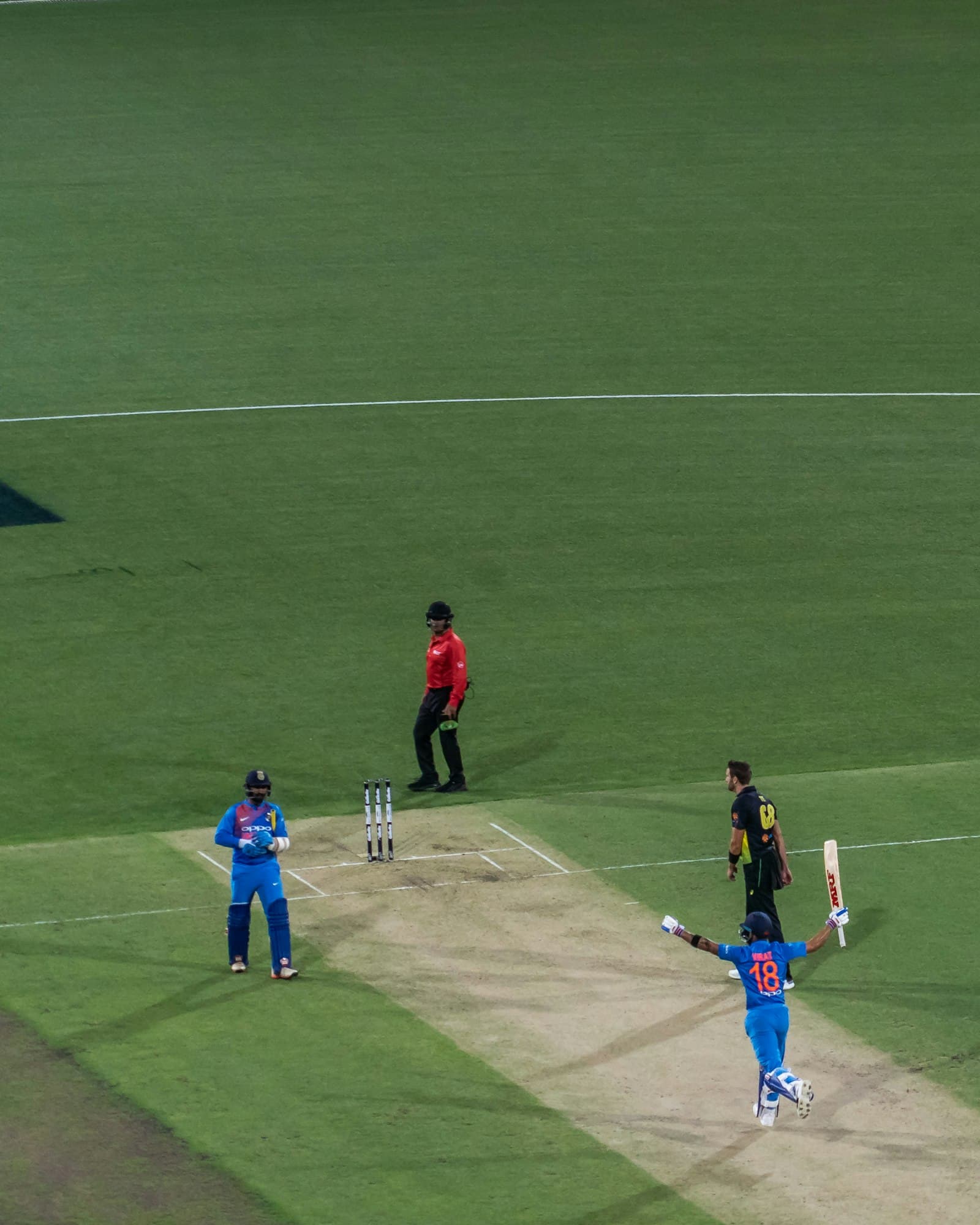
 Photo: vicky adams / Unsplash
Gully cricket rules, one page at a time
Nobody ever wrote these down. Every lane, terrace and turf plays its own version, and every version is somebody's “obviously”. So here they are: 15 house rules, what each one means, the arguments it starts, and how to score it.
Every rule below is one Gully Crix actually scores, as a switch you turn on before the toss. The Laws of cricket don't cover most of them. That's rather the point.
Batting format
Who bats, how many at once, and when an innings is really over.


Teams and squads
Odd numbers, latecomers and the player who belongs to everybody.

Unequal teams
Fifteen people turned up. Someone's getting the smaller team, and everyone's hoping it isn't them.

Common player
Eleven players, two teams. Somebody has to be on both.

Late joiners
“Bhai, main bhi khelunga.” Every match, about fifteen minutes in.

Switching players mid-match
Somebody's mum is calling from the balcony. Somebody's mum always is.
Gully ways to be out
Three dismissals you won't find in the Laws of cricket.



Extras and overs
Wides, no-balls, free hits, and cutting a game short.



Tied matches
What happens when the scores finish level.

Leaving the crease
Walking off without the bowler doing anything.

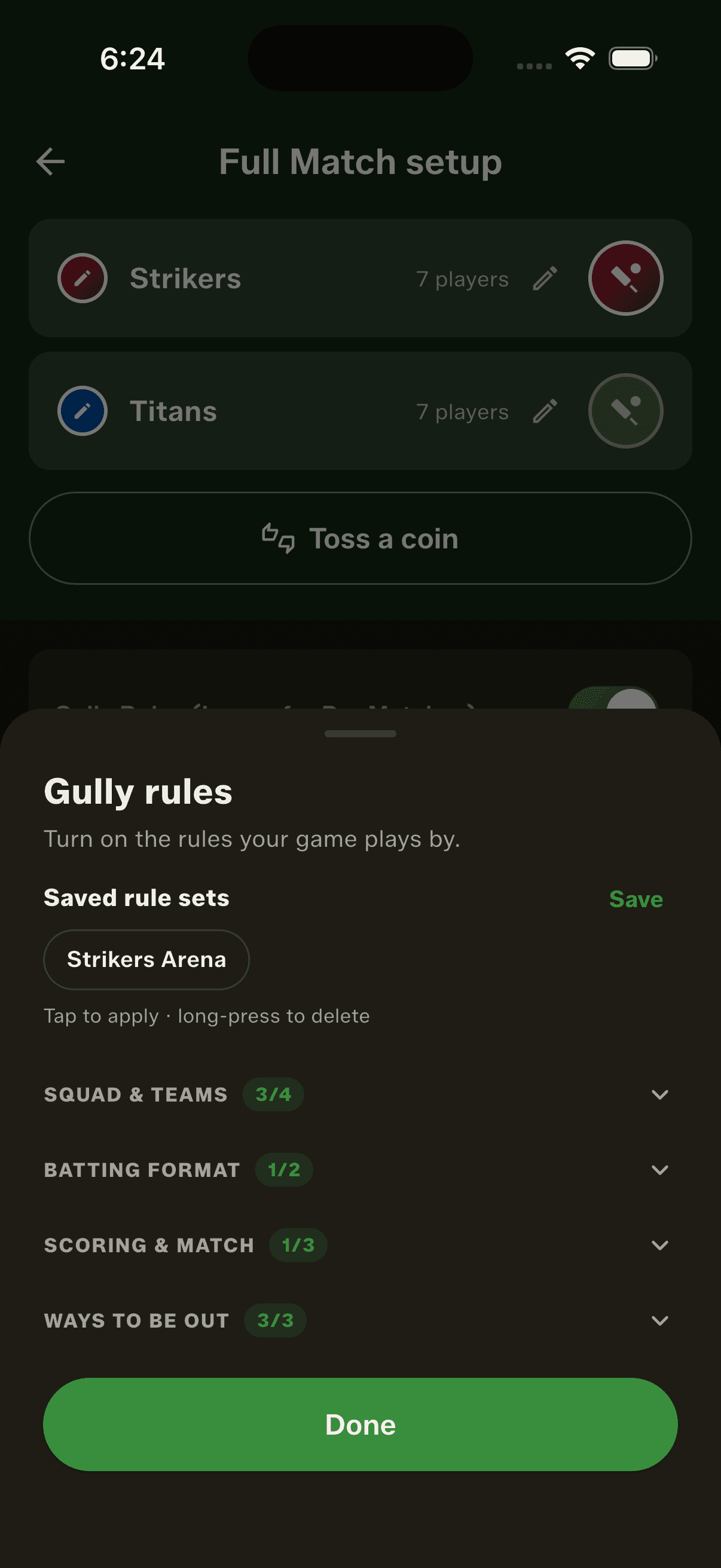
Save your ground's rules once
If you play the same turf every Sunday, set its rules once, give them a name like “Strikers Arena”, and pick them in one tap next time. A saved set holds the gully rules, the arena and the ball type, and nothing else. It describes the ground, not the match.
Want the long version?
These pages are the reference. For the stories behind them, read every gully cricket rule, explained and the unwritten rulebook every Indian knows. For step-by-step app instructions, the Help Centre has a guide for each switch.