Why it exists
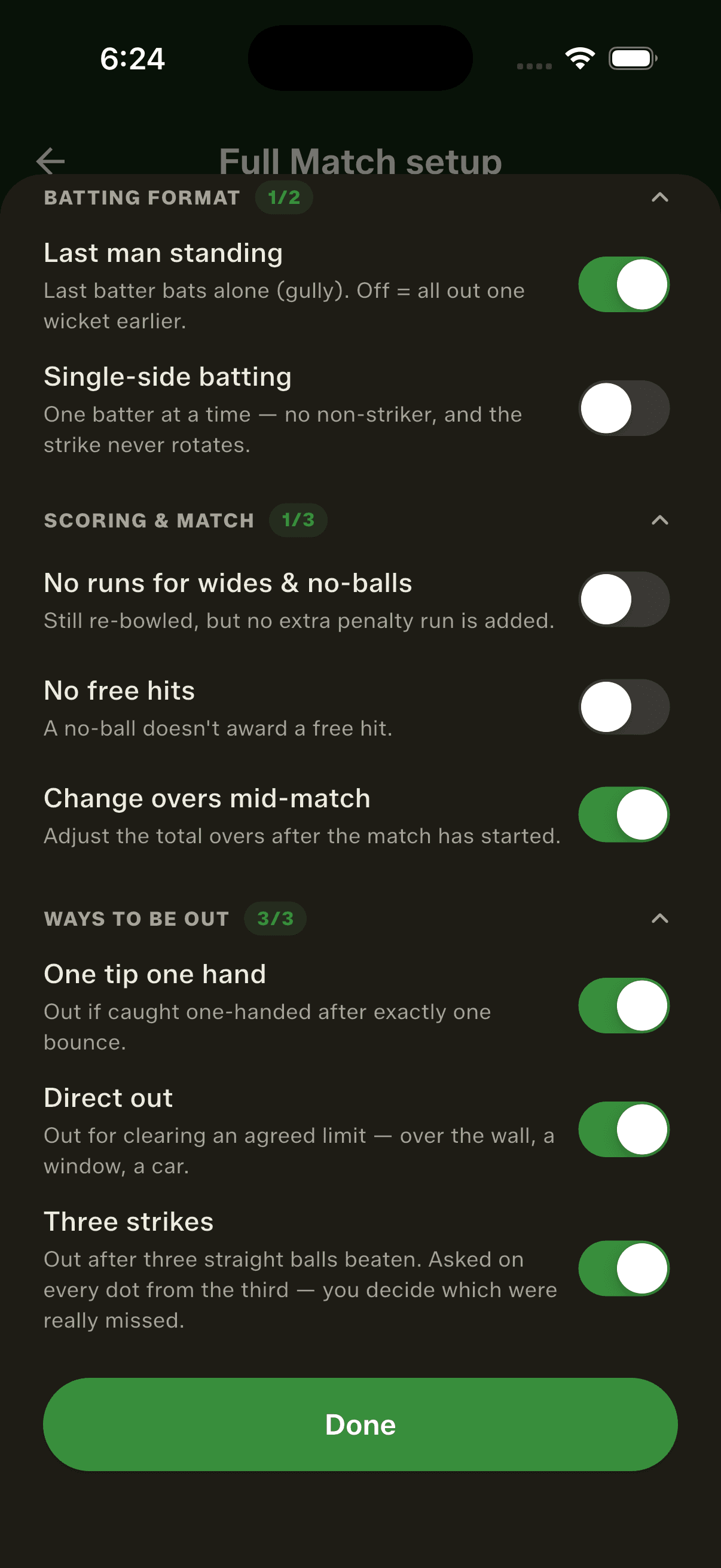
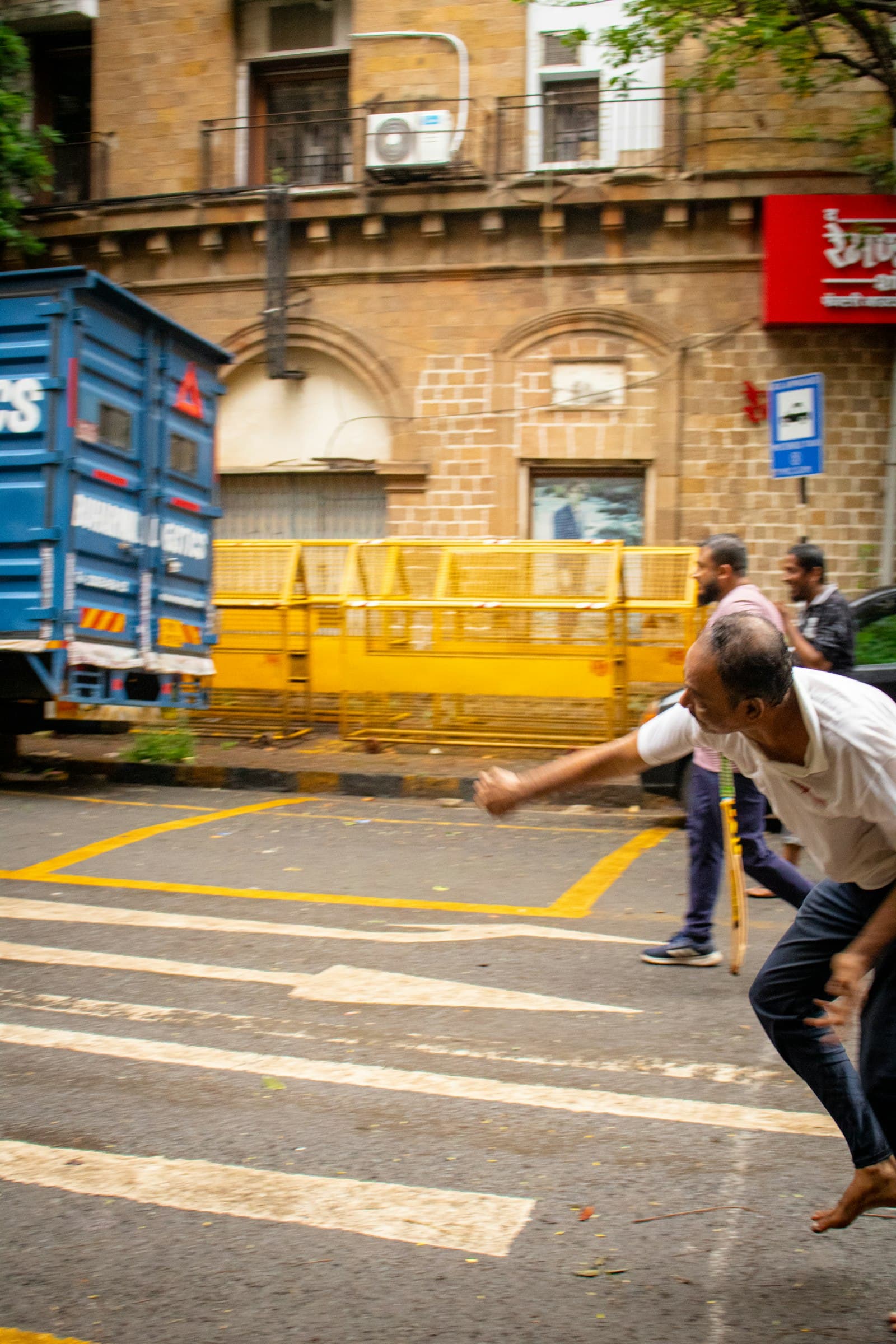
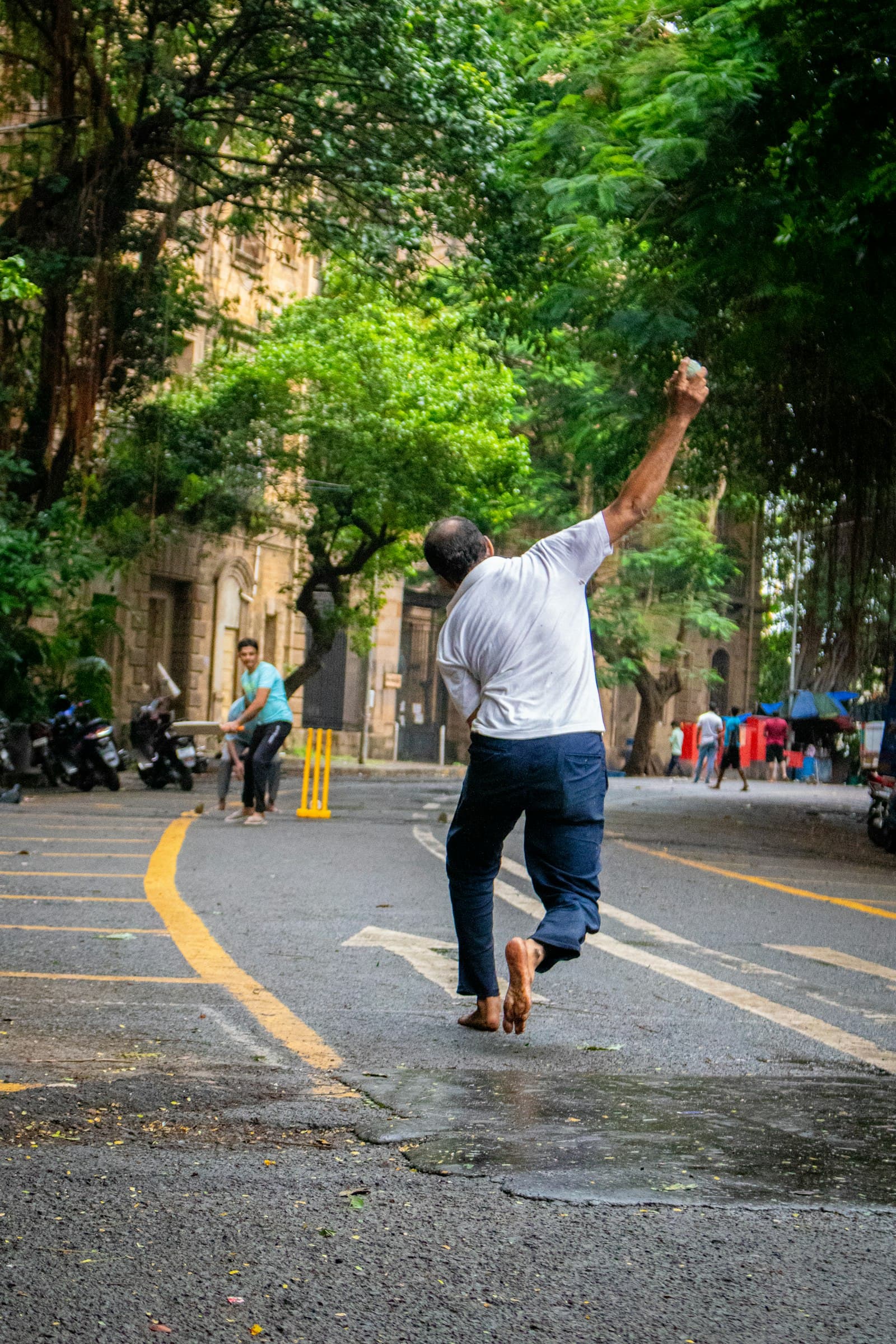
A tennis ball off concrete bounces high and slow. On a small ground that makes catching it on the full almost pointless, because the ball keeps landing just in front of somebody. One tip one hand gives the fielders a fair chance, turns every lofted drive into a gamble, and makes the covers the most dangerous place on the road.
It's also the single most satisfying way to get your best friend out, and everybody knows it.
What counts and what doesn't
| The catch | Out? |
|---|---|
| One hand, after one bounce | Out |
| Two hands, after one bounce | Not out |
| One hand, after two bounces | Not out |
| Either hand, on the full | Out. That's just a catch. |
| Off a wall, then one hand | Ground rule. Agree it first. |
The arguments it starts
- “It touched my other hand.” If the second hand touched the ball, it's two hands. Brushing your own wrist doesn't count. Everybody will still argue about it.
- “That was two bounces.” On broken tarmac a second little skip is almost impossible to see. The fielder's word usually wins, which is exactly why nobody trusts the fielder.
- Walls and roofs. Some grounds count a bounce off the wall as the tip. Some count it as nothing. Decide before the first ball.
How it reads on the scorecard
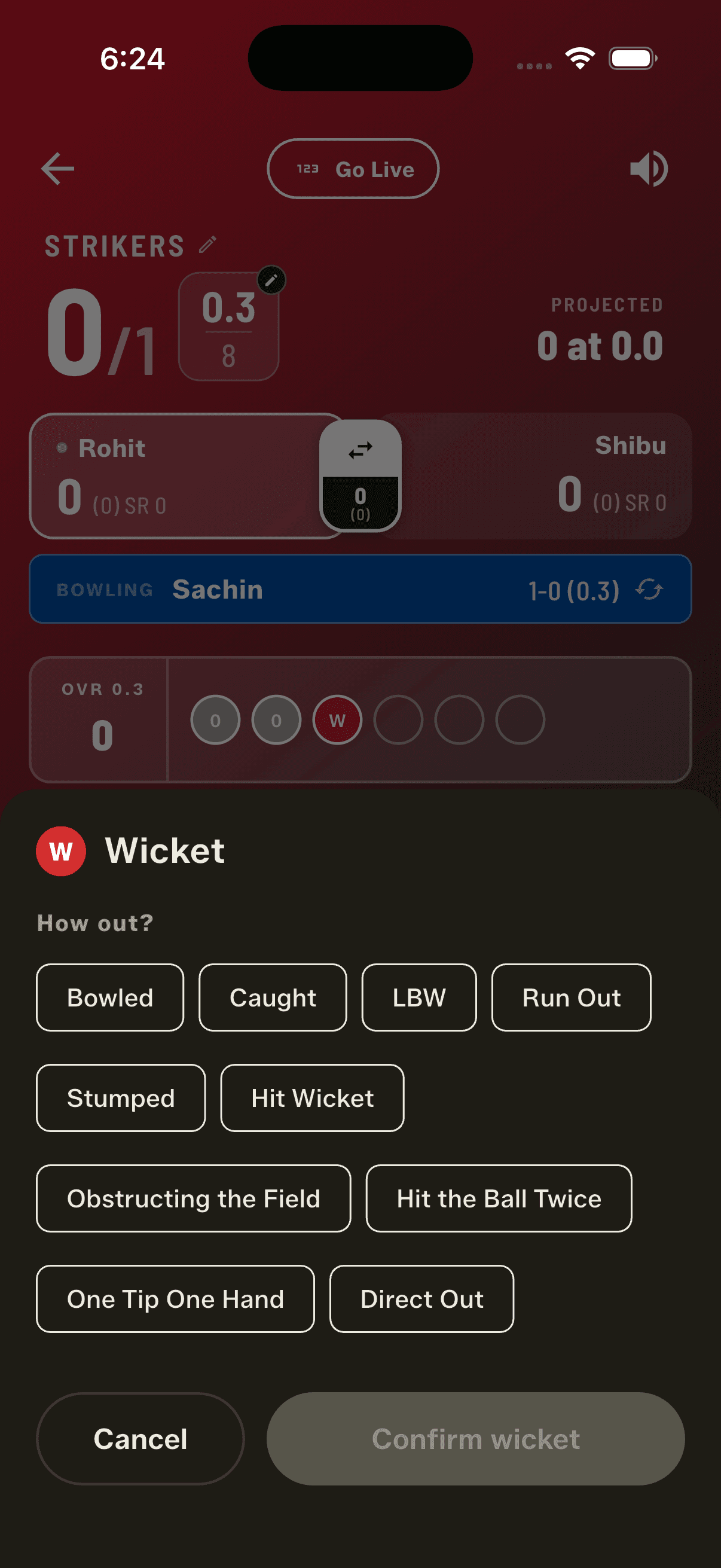
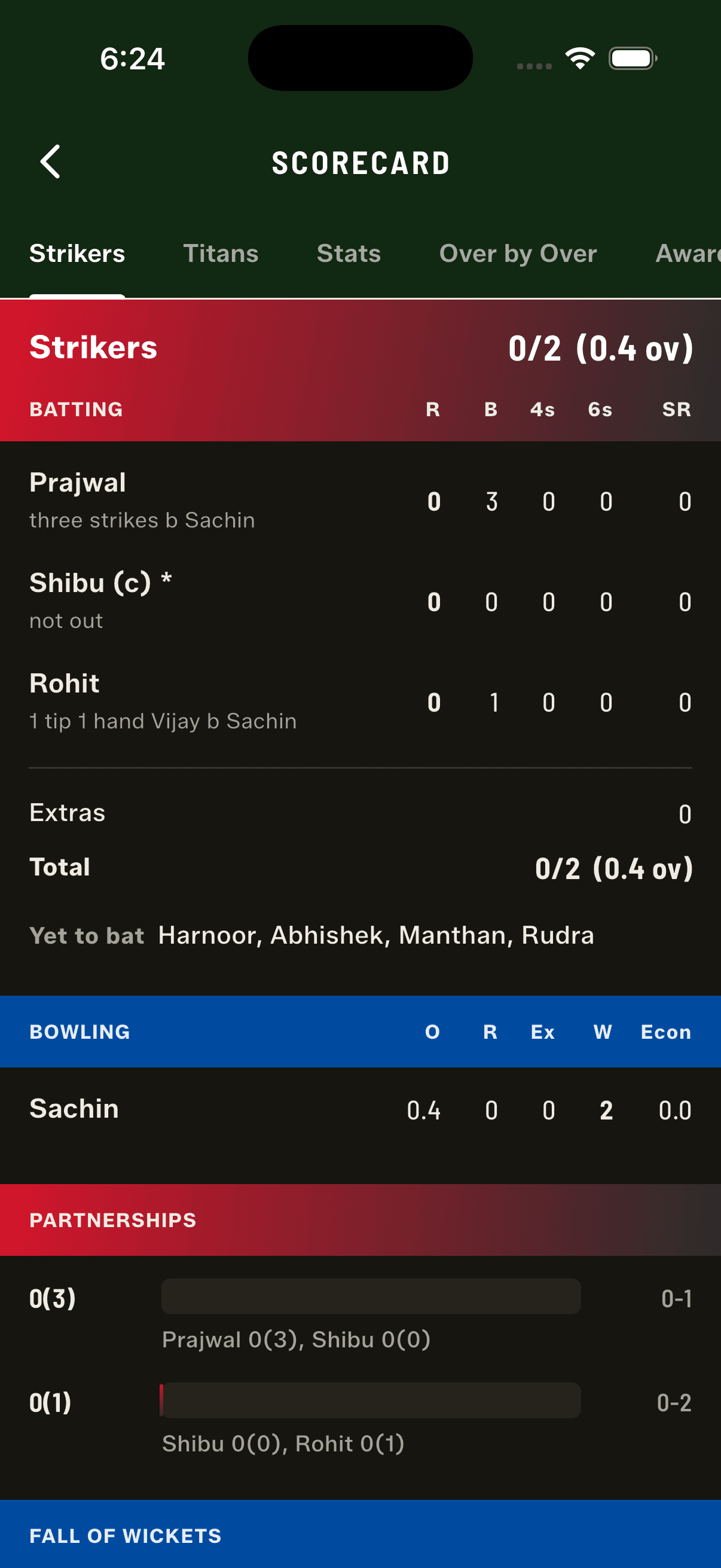
It's written like a catch, with the rule's name in front: 1 tip 1 hand Vijay b Sachin. Vijay took it one-handed off the bounce, Sachin bowled it, and Sachin gets the wicket in his figures.