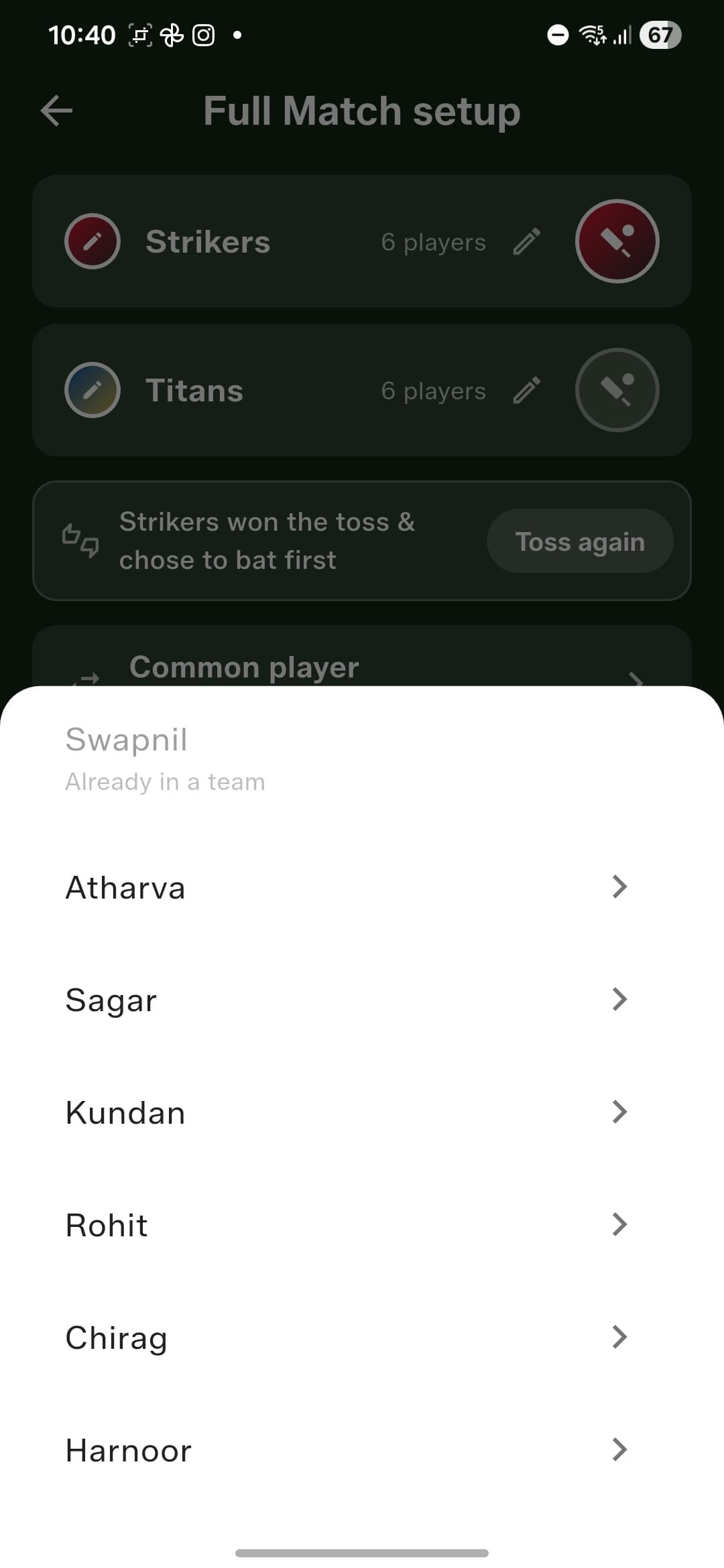
Who gets to be common
Usually the keeper. Nobody wants to keep, and keeping for both sides is a fair trade for batting twice. Otherwise it's the youngest kid, a friend's cousin who's visiting, or the person who owns the ball. Bat and ball owners have always had special rights. Nobody wrote that down either.
House rules to agree first
- Bat twice? Most grounds say yes, once for each side, often at a fixed spot in the order.
- Bowl for both? That's a lot of the match in one person's hands. Plenty of grounds let him bowl for one side only.
- Where does he bat? Top of the order for both makes him the most important player on the field. Many grounds put him last.
- The dropped catch. He drops one off his own other team's bowling, and now he's “fixing”. Agree in advance that everybody drops catches.
How the numbers work
He's in both lineups, so each side counts him when working out its all-out point. If both teams have six plus a common player, both are all out at seven with last man standing on.
His career stats stay in one place. The runs he makes for Team A and the runs he makes for Team B are still his runs, so they add up on one profile instead of splitting him into two different people.