How it plays
In proper cricket the innings finishes when the tenth wicket falls. The eleventh batter hasn't done anything wrong. There's just nobody left to run with them, so they walk off not out and never face a ball.
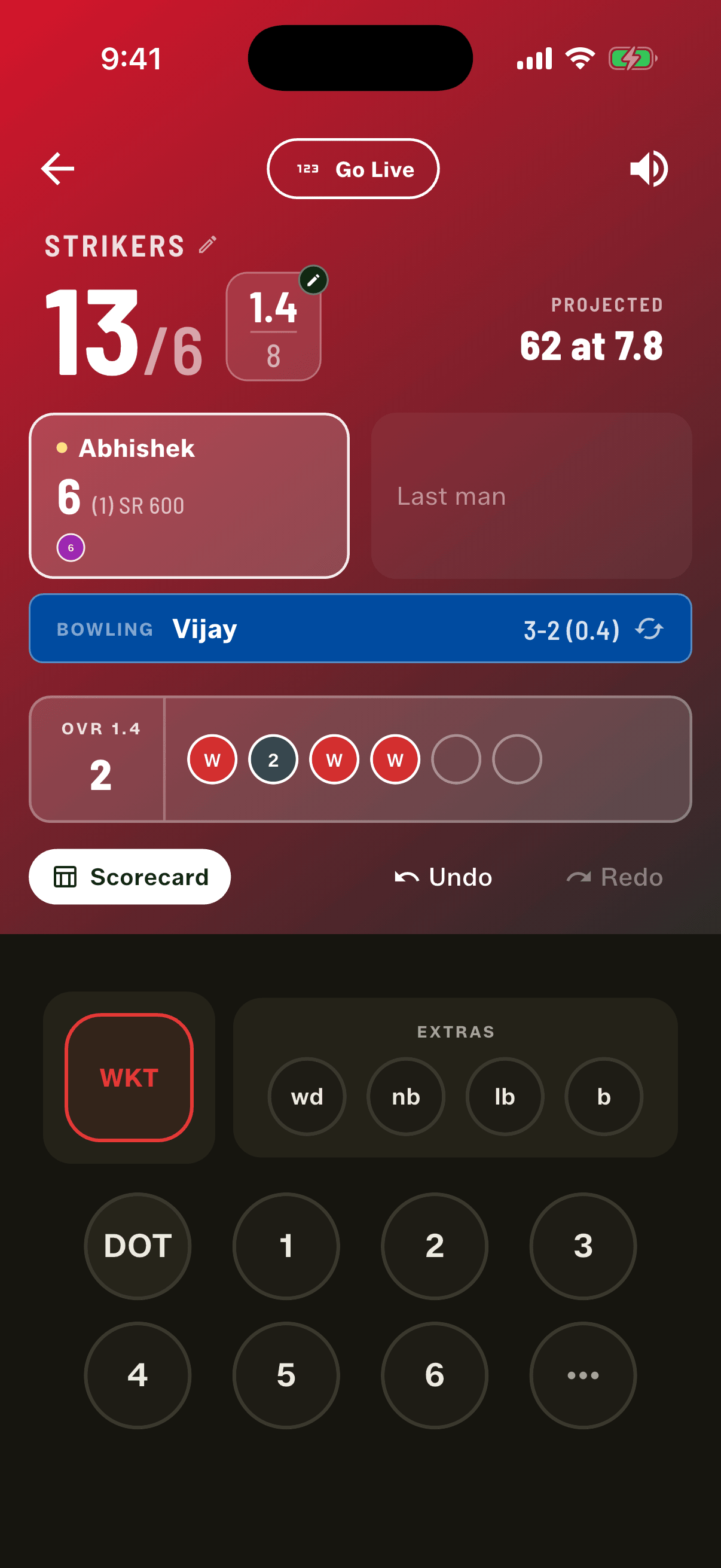
Gully cricket has never been fussed about that. You've got seven a side, the light is going, and the last batter paid the same auto fare as everybody else. So they bat. They face every ball, singles don't swap anyone's ends, and they keep going until they're out, the overs run out or the target is gone.
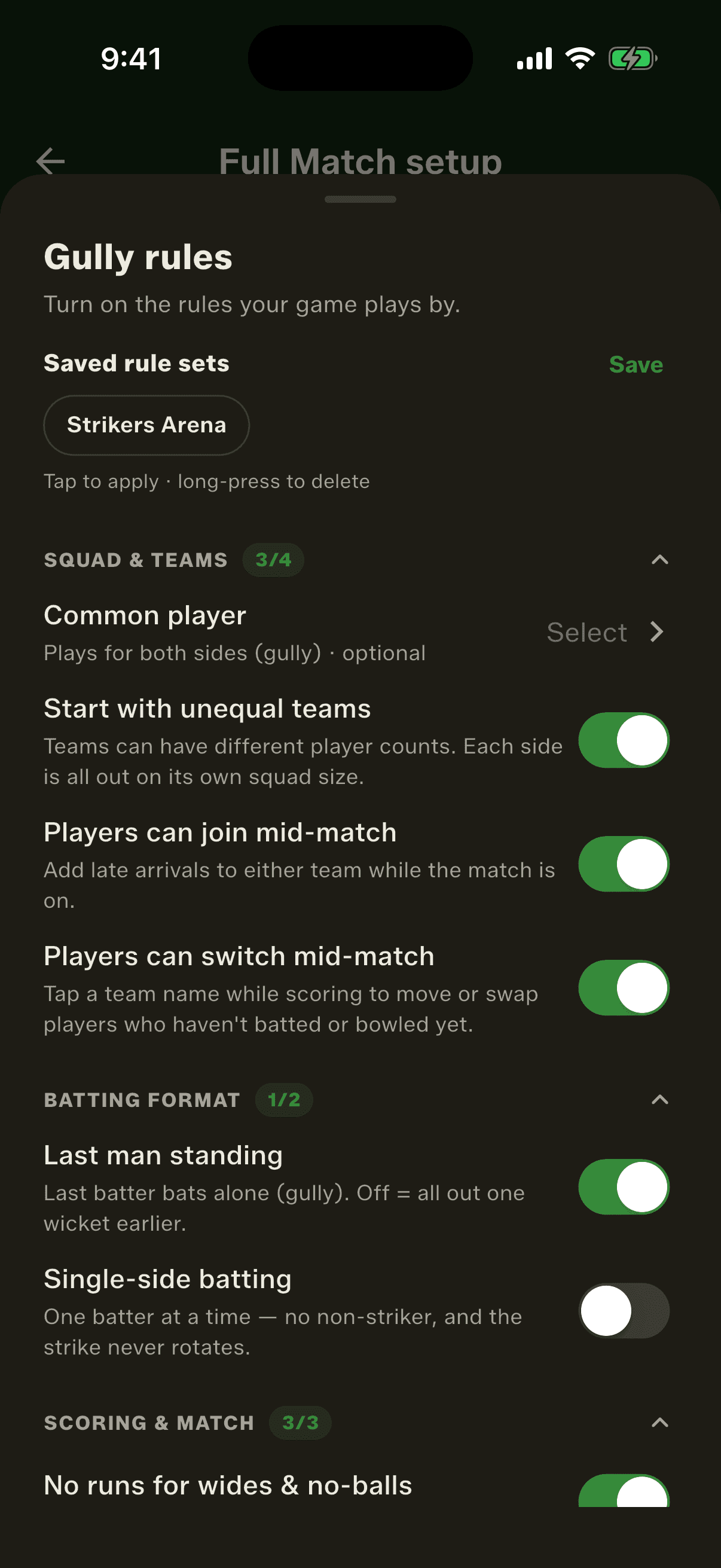
| Last man standing on | Last man standing off | |
|---|---|---|
| All out at | 7 wickets | 6 wickets |
| The last batter | Bats alone until out | Left not out, never faces |
| A single to the last man | He keeps the strike | Normal strike rotation |
Why so many grounds play it
Maths, mostly. In an eleven-a-side game losing one batter costs you a tenth of your batting. In a six-a-side game it's a sixth. Small teams can't afford to leave anyone padded up and unused.
It also makes the end of an innings worth watching. Instead of a shrug at 6 for whatever, you get one player with nothing to lose trying to hit the last over into the next building.
Settle these before the toss
- Does he have to run? Most grounds say yes, all the way to the other end and back. Some let the lone batter call the runs from the crease. Pick one before the first close single, not after.
- Run out at which end? With nobody else batting, he can be run out at whichever end he's running to. Throw at those stumps.
- Does it apply in a super over? No. A super over is two wickets and done, whatever your house rule says.