Why you'd play it
Space is the obvious reason. A lane between two buildings has room for one set of stumps and a short run-up, and even that's generous. Put a second batter at the bowler's end and he's standing in the bowler's way.
Numbers are the other reason. With five players, two batting means three fielding, and one of those is bowling. Take the partner away and you've gained a fielder, which is the difference between a game and a lot of fetching.
There's a nice side effect too. Nobody gets run out by a partner's terrible call, which quietly removes about half the arguments in gully cricket.
How the runs work
Grounds split here. Some make the batter run to a marker, a slipper or a brick or the edge of the manhole cover, and back. Others count runs by where the ball goes: past the bowler is one, off the far wall is two. The scorer only needs the number. How it was earned is between the batter and the fielders.
What changes on the scorecard
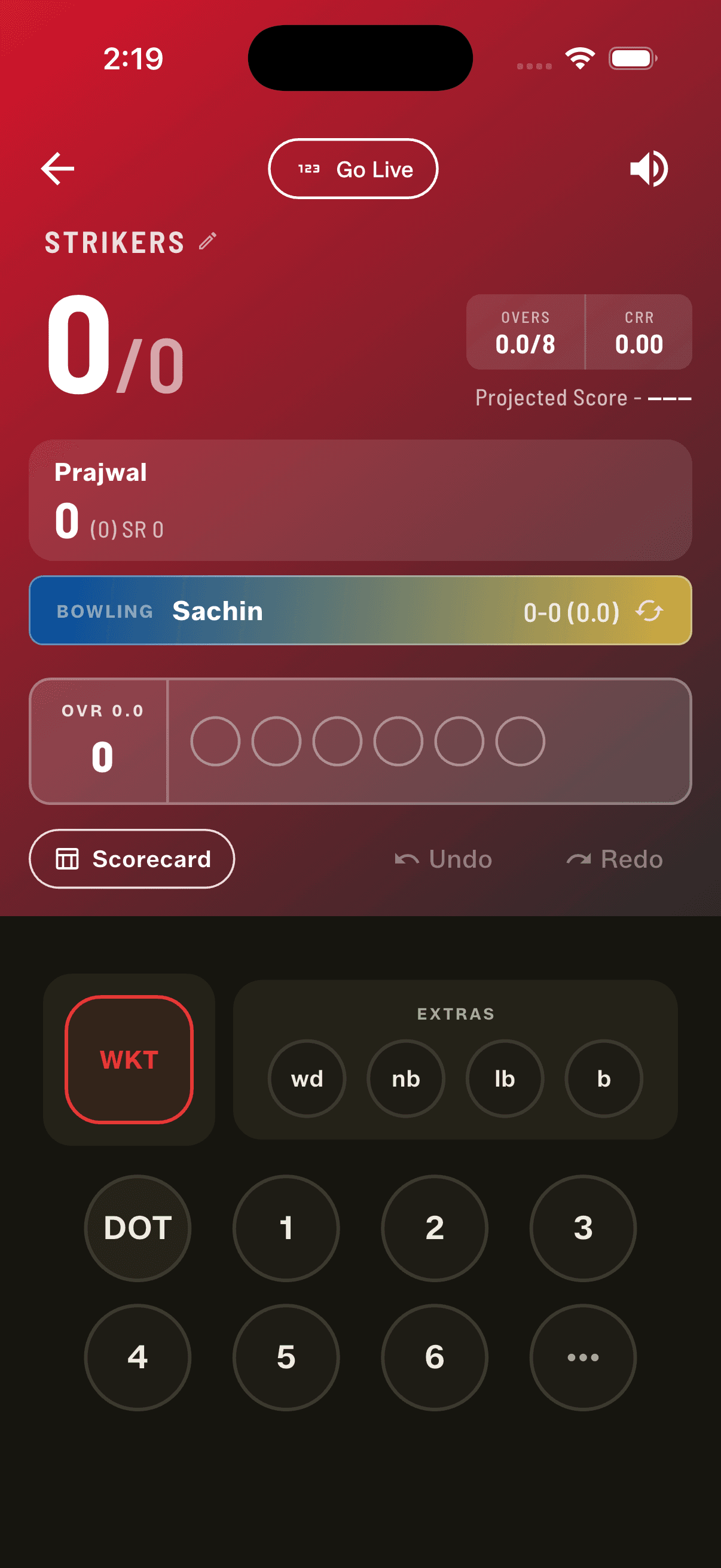
- One batter on the scoring screen, no non-striker.
- No partnership table, since there's never a partner.
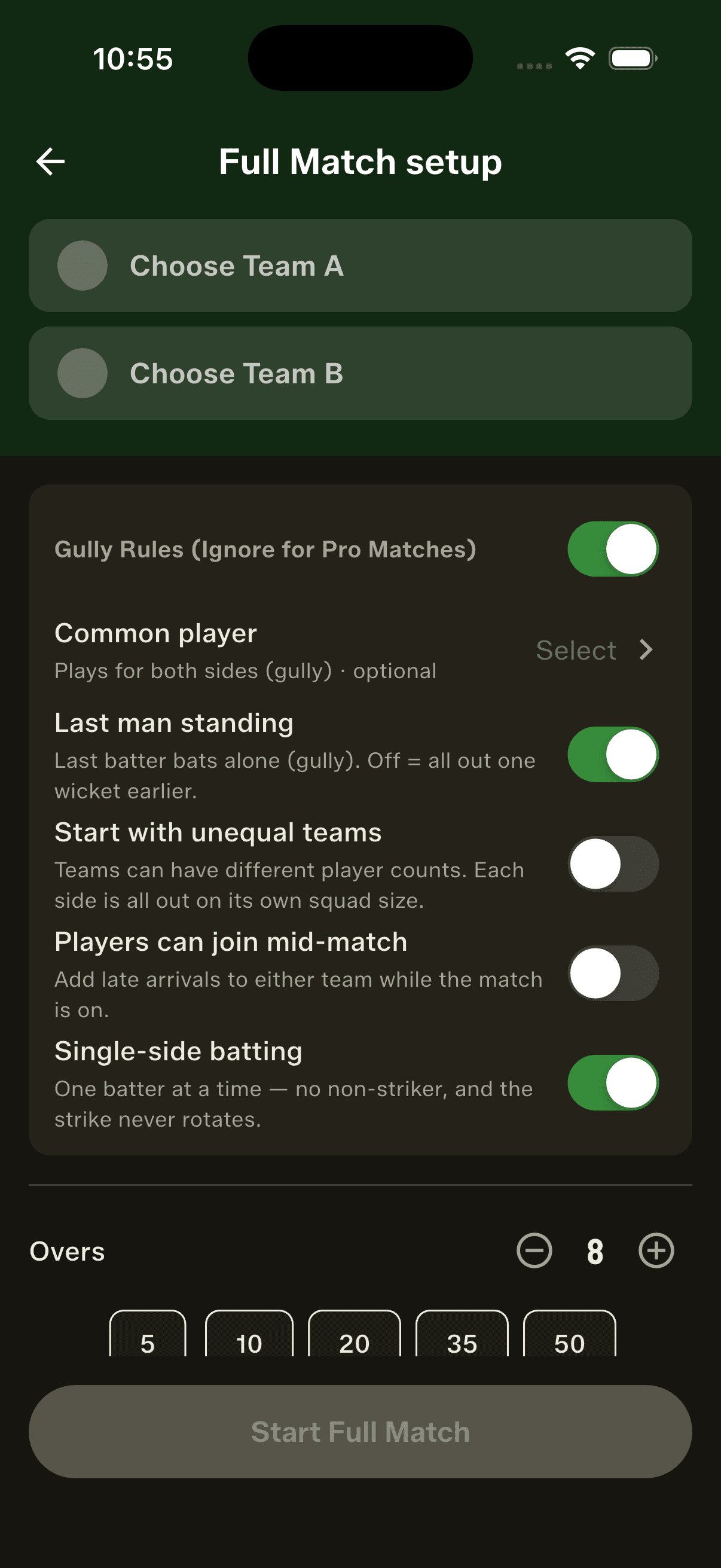
- Every batter can be dismissed. Last man standing comes with the format.
- Balls faced add up neatly, one batter after another.