Why it exists
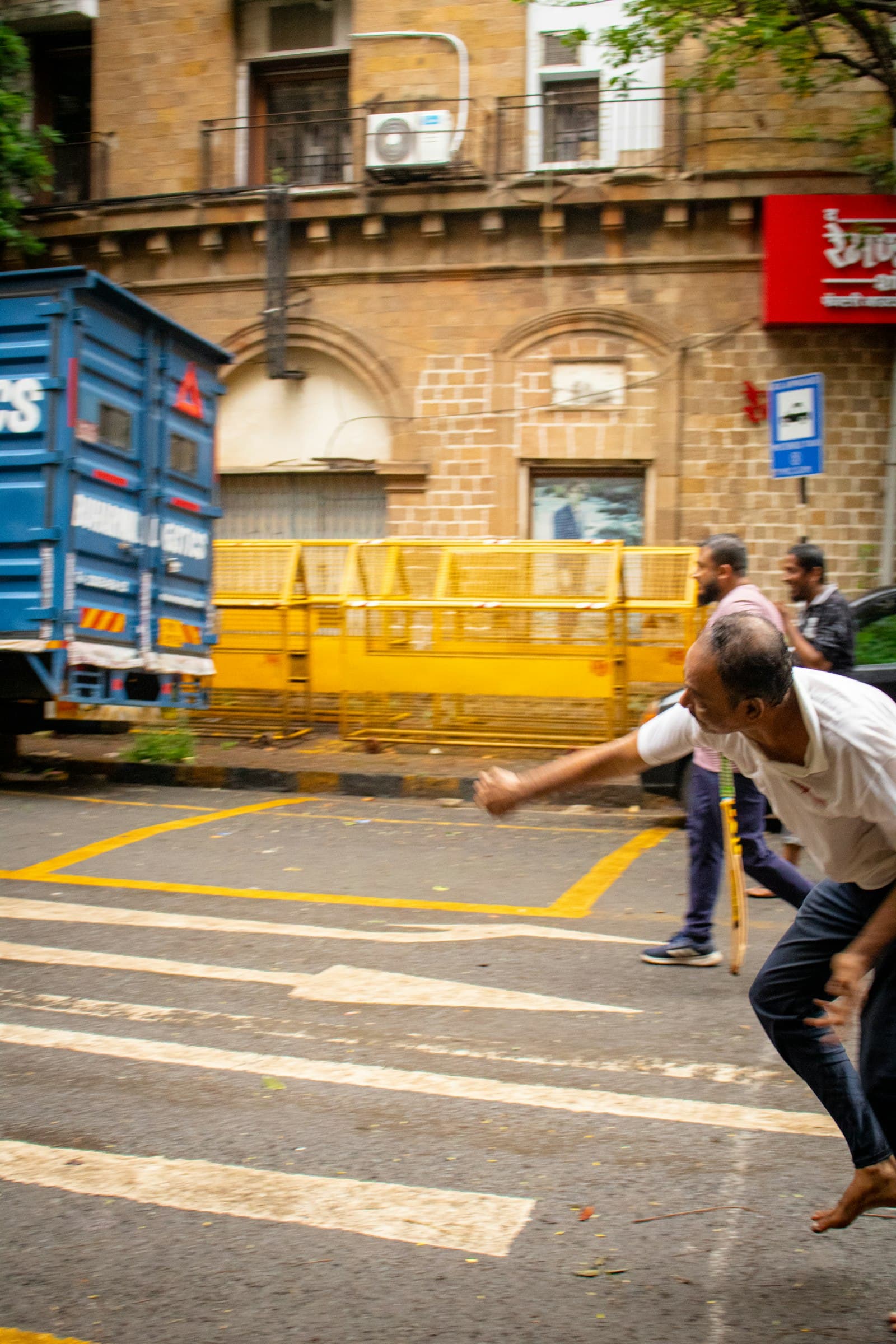
A lot of gully cricket doesn't give LBW. Nobody can agree what was going on to hit the stumps, especially when the stumps are three bricks. So a batter who keeps missing is surprisingly hard to get out, and there are six people waiting to bat.
Three strikes fixes that. Get beaten three times running and it's the next batter's turn.
What counts as a strike
This is where grounds differ. The strict version says three dot balls in a row, blocked or not. The version most people actually play says three balls the batter was genuinely beaten by. A solid forward defence isn't a strike. A wild swing through thin air is.
| The ball | Strike? |
|---|---|
| Swings and misses | Yes |
| Plays and misses outside off | Yes |
| Blocks it dead | Depends on the ground |
| Scores a run, any run | No, and the streak resets |
| Wide or no-ball | No, and the streak resets |
| Byes or leg-byes | No, and the streak resets |
Balls faced by the other batter don't touch your count. Beaten, then your partner faces two, then beaten again: that's two strikes, not a reset.
The bowler question
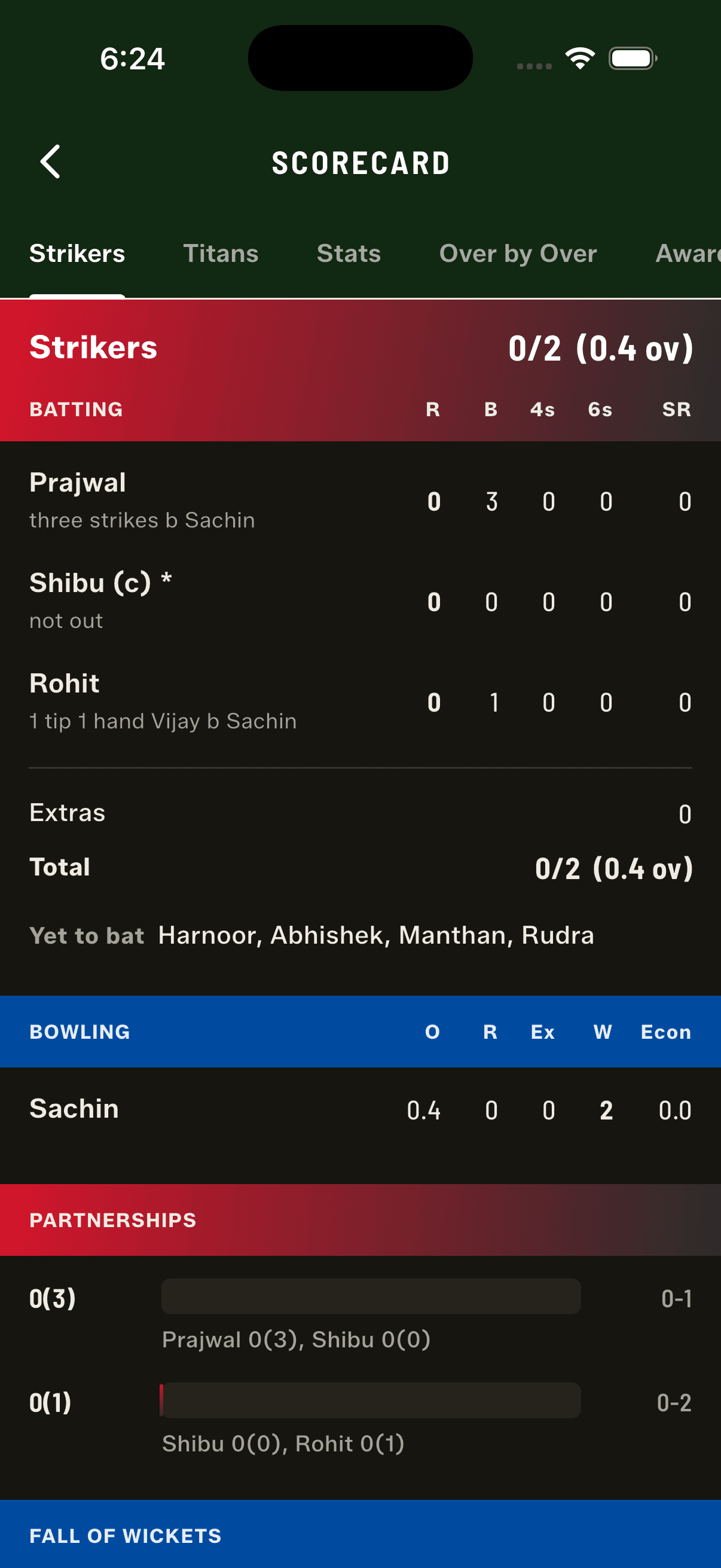
Three strikes is a bowler's wicket, but only if one bowler did all the work. Beaten twice at the end of one over and once at the start of the next is two bowlers, and neither of them gets it. It's the fairest answer, and it's the argument you'd have otherwise.
How Gully Crix keeps count
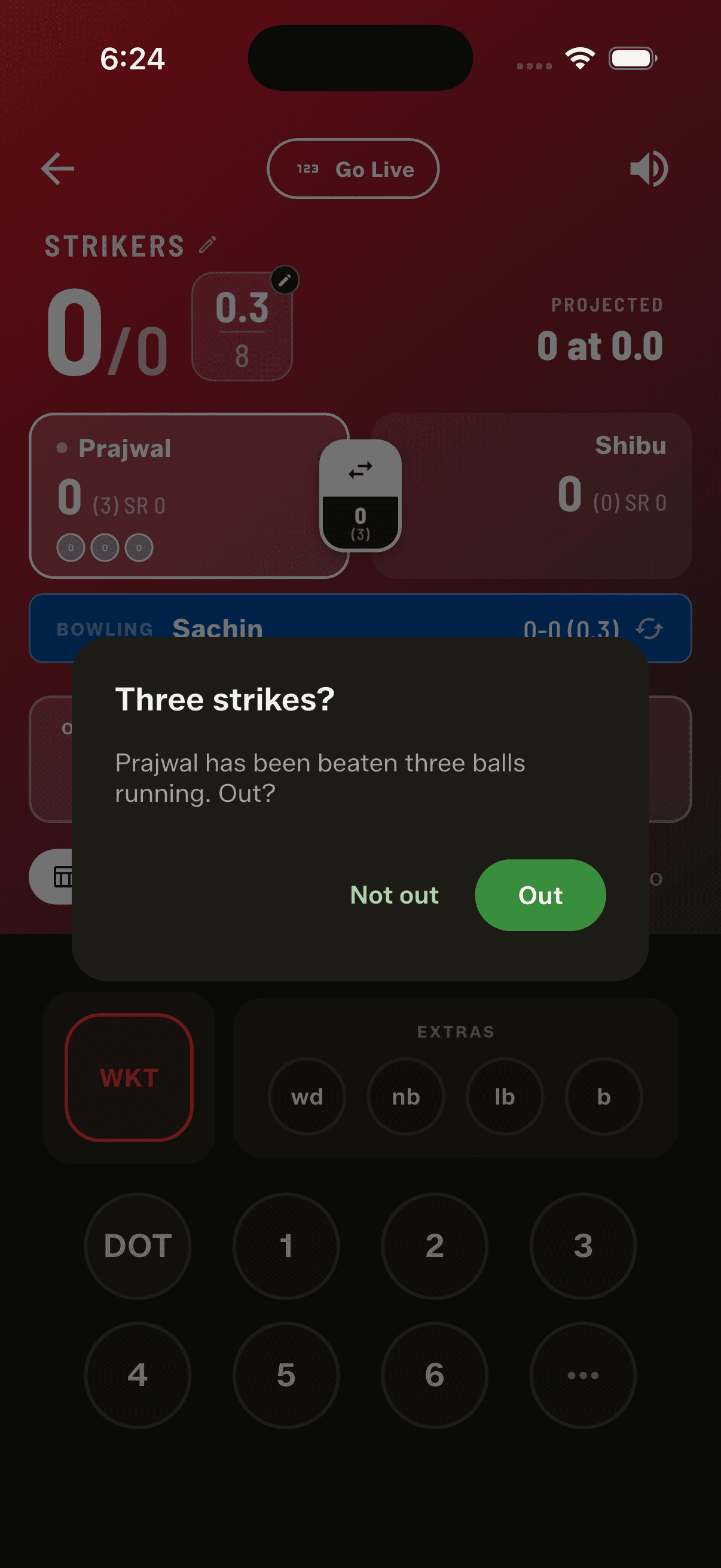
The app can see dot balls. It can't see whether the batter swung. So on the third dot in a row it asks you: beaten three balls running, out? Say not out, maybe because one was a block, and it asks again on the next dot, and keeps asking until the batter scores or you say yes. You're the umpire. The app just keeps count.