Why grounds play it
In a short game, a run a wide adds up fast. Fifteen extras in a six-over match can be a quarter of the total, and it's usually the youngest bowler giving them away. Most gullies decided long ago that bowling the ball again is punishment enough.
Tape-ball cricket has its own reason. A taped tennis ball swings and skids all over the place, wides are common, and a run for each one would decide a lot of matches on its own.
What still counts
| What happened | Standard rules | No runs for wides & no-balls |
|---|---|---|
| A wide, nothing else | 1 run, bowl again | 0 runs, bowl again |
| A no-ball the batter hits for four | 5 runs | 4 runs |
| A wide, and the batters run two | 3 runs | 2 runs |
| Legal balls in the over | 6 | 6 |
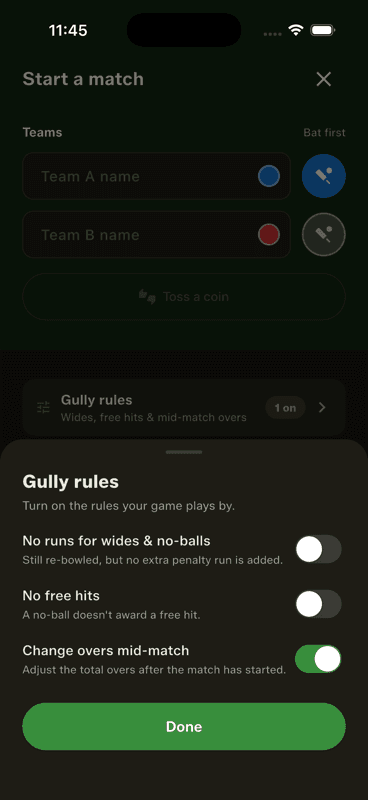
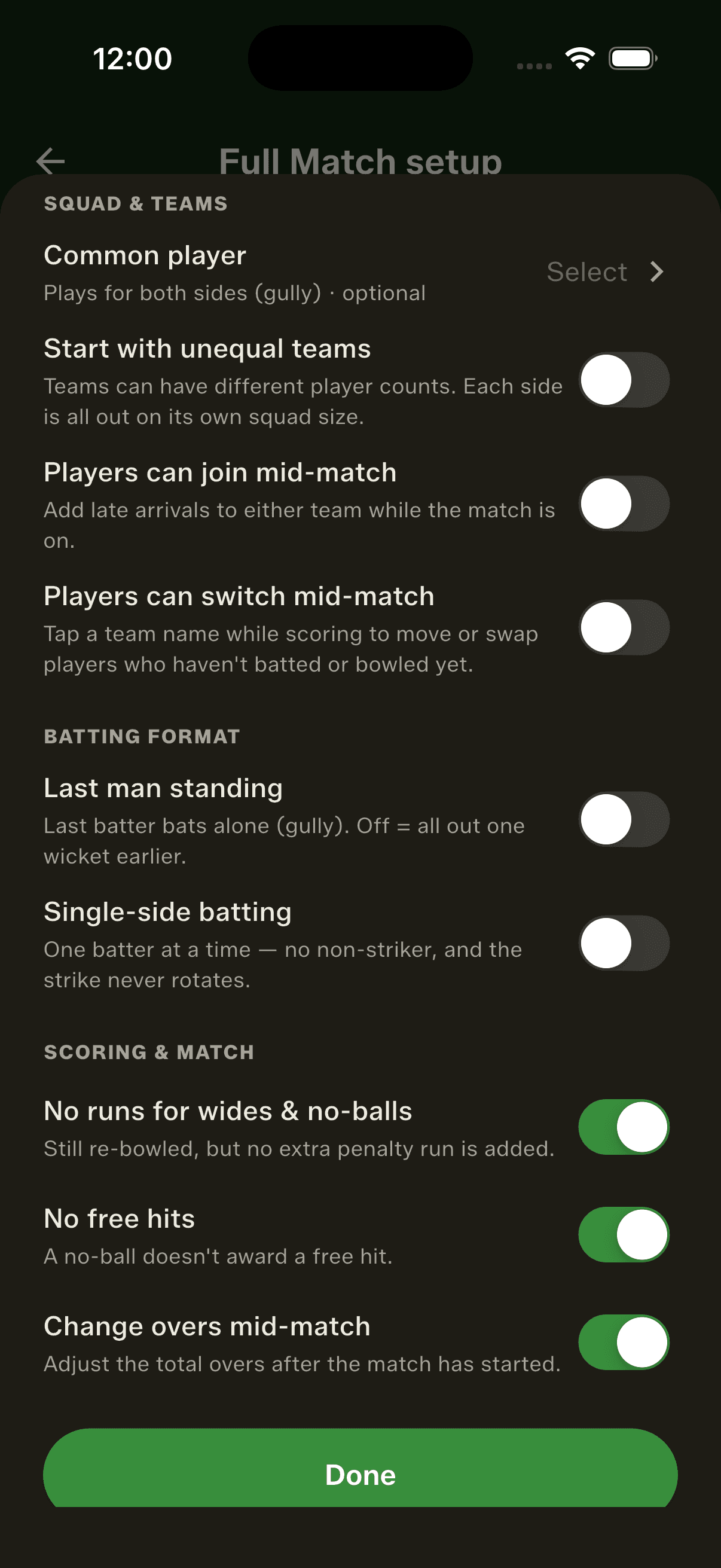
So it isn't “extras don't exist”. It's “the automatic run goes”. If the batters actually do something on a wide, they get it.
Free hits are a separate question
Dropping the penalty run doesn't drop the free hit. A no-ball can give no run and still give a free hit, or neither, or both. If your ground doesn't play free hits either, that's no free hits, its own switch.