| Retired hurt | Retired out | Timed out | |
|---|---|---|---|
| Is it a wicket? | No | Yes | Yes |
| Can they bat again? | Yes | No | No |
| Bowler gets it? | No | No | No |
| Why it happens | Injury or illness | A choice | Too slow to the crease |
Retired hurt
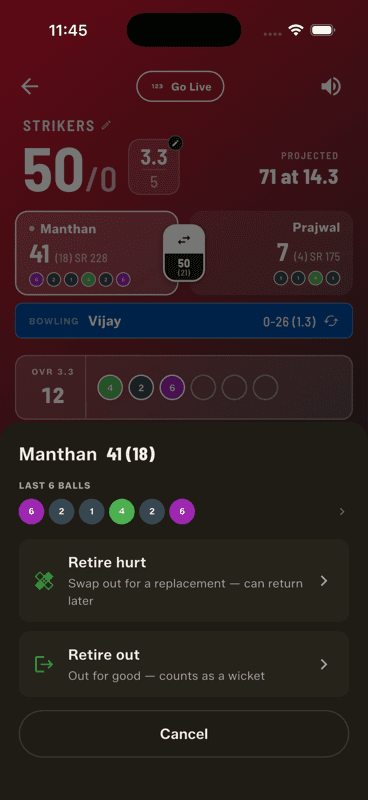
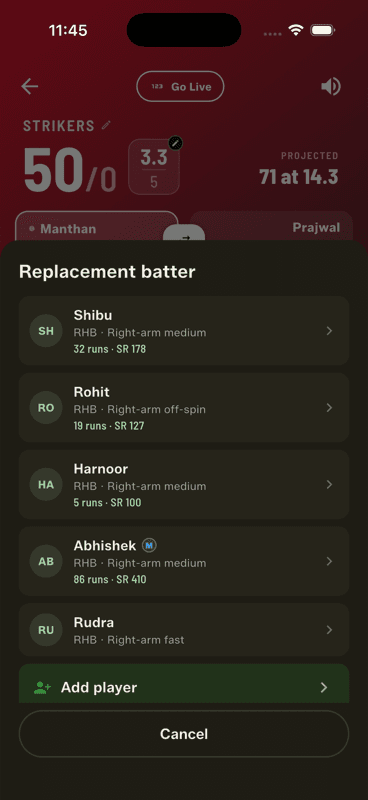
The ball hits somewhere painful, or somebody has batted for twenty minutes in 40 degrees and needs water and shade. They walk off, the next batter comes in, and the retired batter isn't out. Under the Laws they can resume when a wicket falls or another batter retires. In gully cricket they come back when they've stopped limping and the captain says so.
Retired out
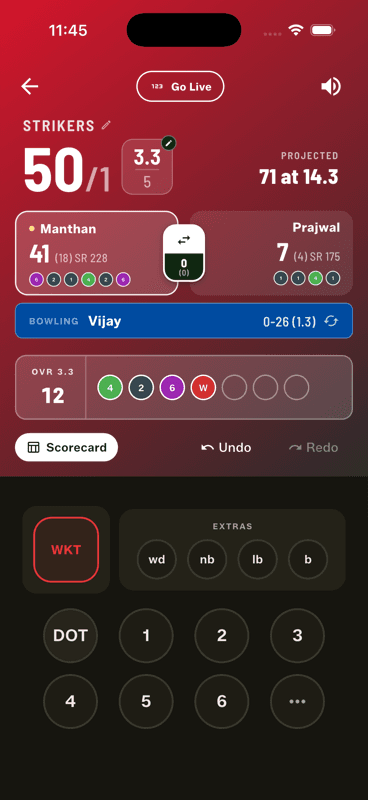
This one's a choice. The batter isn't hurt, they just go, and it counts as a wicket. In professional cricket it's a rare tactical move, like making room for a big hitter in the last few overs.
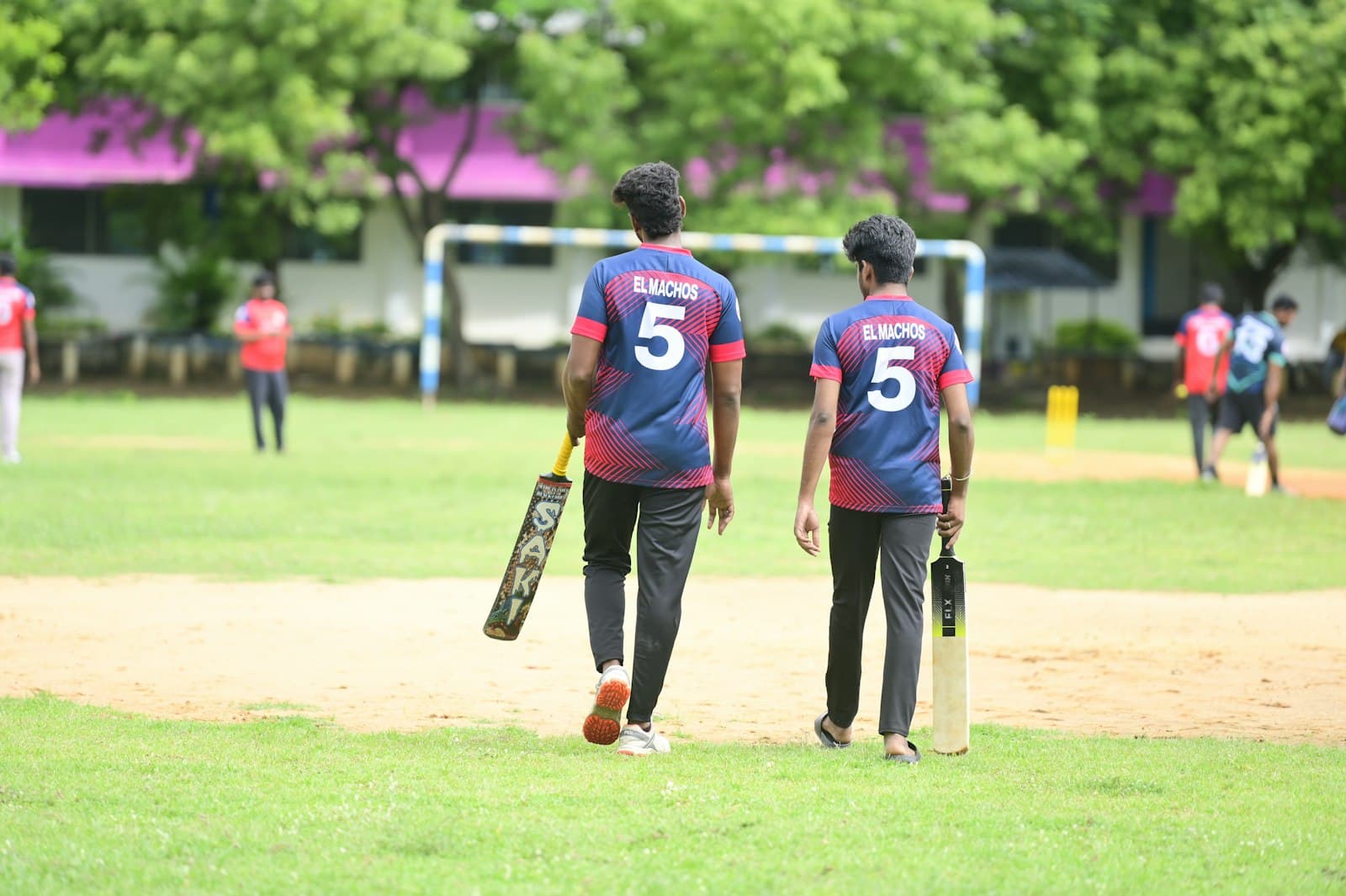
In gully cricket it's more often the batter on 40 who won't get out while four people are still waiting. If your ground lets that batter come back later once everyone else has had a go, score it as retired hurt instead, because it isn't a wicket.
Timed out
The new batter has three minutes under the Laws to be ready to face, and two minutes in international cricket. It's so rare at the top level that the first timed out in international cricket only happened in 2023, when Angelo Mathews was given out against Bangladesh at the World Cup after his helmet strap broke.
In gully cricket, timed out is the friend who went home for lunch and is “coming in five minutes”.