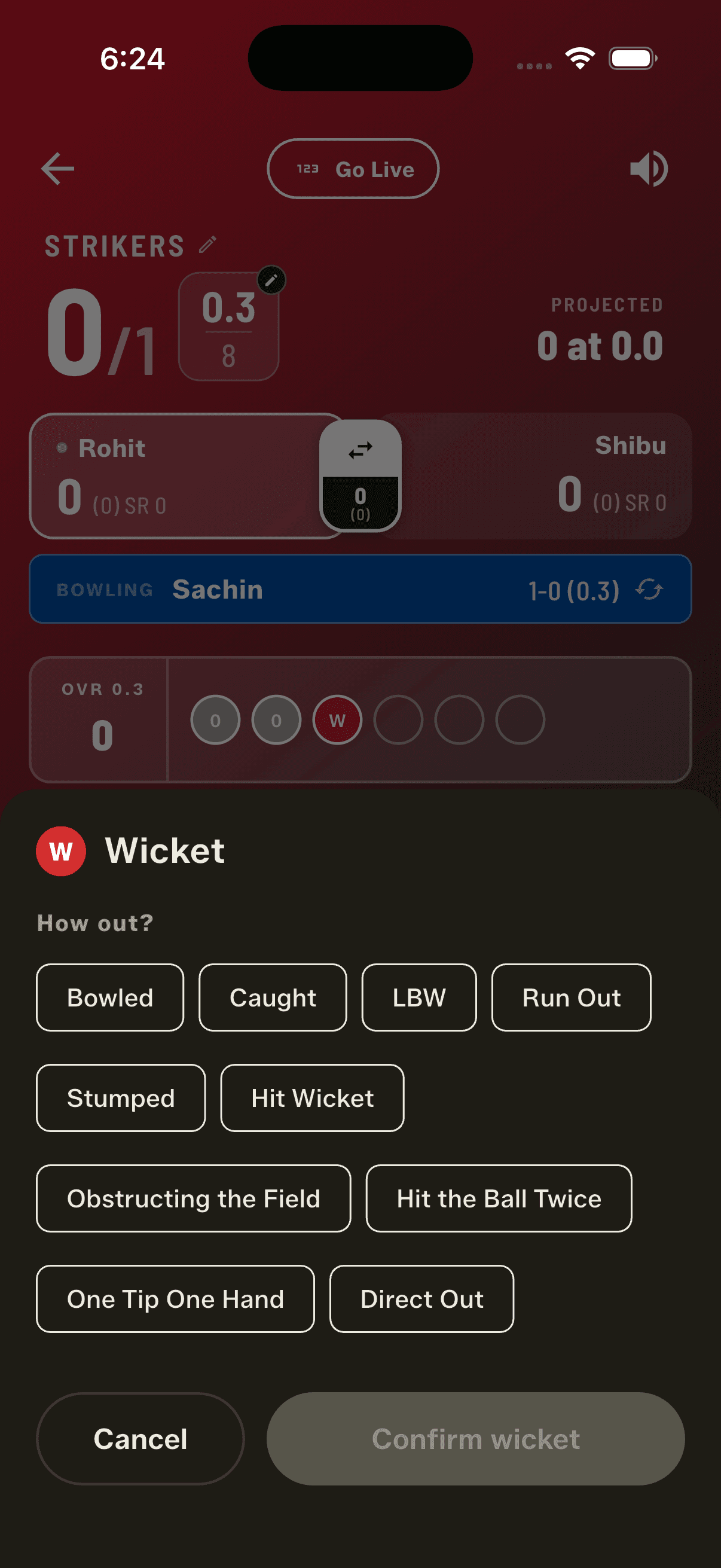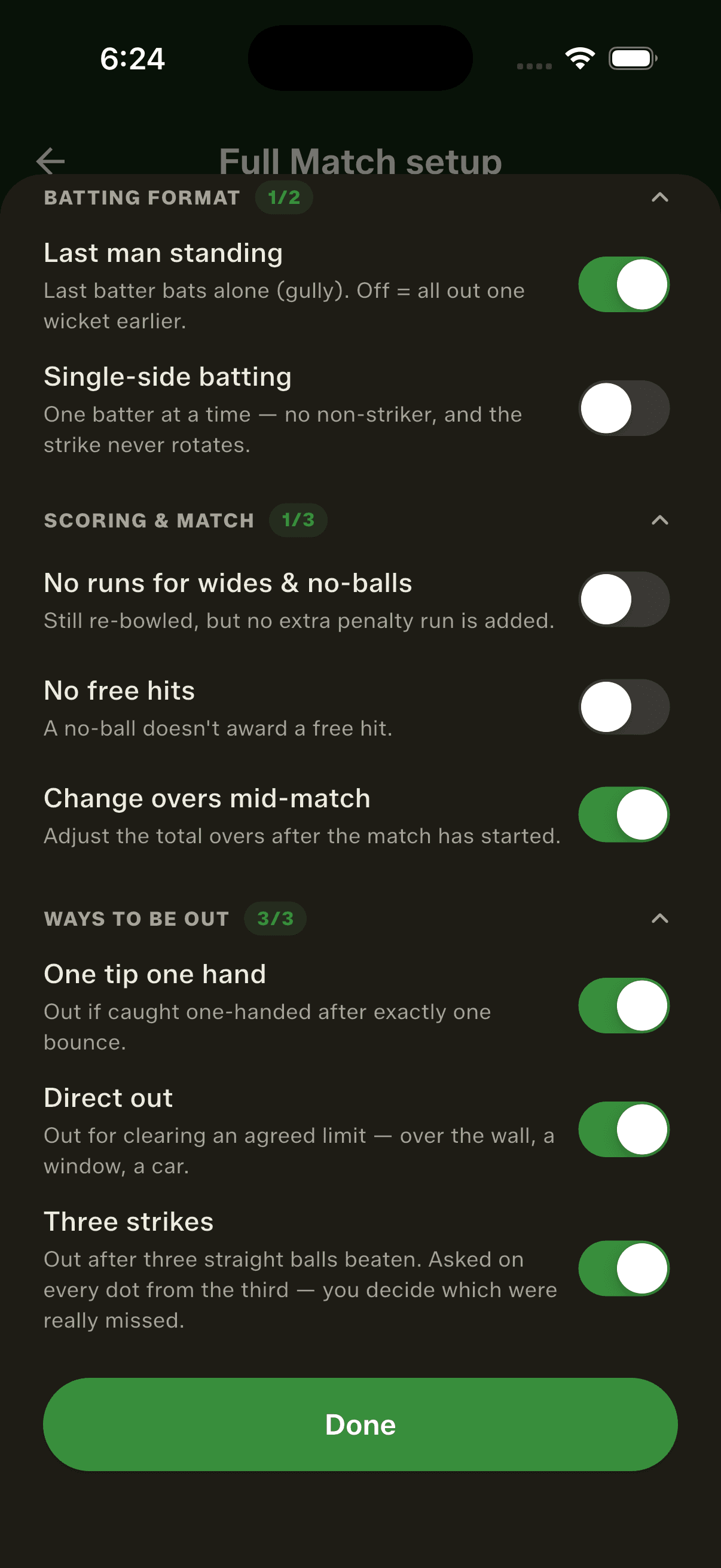
Why grounds play it
Two reasons, and neither is really about cricket. The first is the ball. A tennis ball over the wall into the next compound is a ten-minute negotiation with a watchman, and sometimes it's just gone. The second is the neighbours. Every colony has one balcony, one car and one window that everybody has been warned about. Direct out turns “please don't hit it there” into an actual rule with an actual price.
In Australian and New Zealand backyards the same idea is called six and out, usually because of a fence and whatever lives on the other side of it.
Direct out against a normal six
| Normal six | Direct out | |
|---|---|---|
| Ball clears the limit | 6 runs | Batter is out |
| Whose wicket | Nobody's | The bowler's |
| Who fetches it | Whoever's nearest | The batter who hit it |
That last row isn't in the app. It's older than any app. Jo maarega, wohi laayega: whoever hits it, fetches it.
Agree the limits before the first ball
- Which walls, roofs and cars count as out, and which are just six.
- On the full only, or off a bounce too? Most grounds say on the full.
- Does it still count if a fielder might have caught it? Usually yes. Over is over.
- Hitting the ball into a window rather than over it. Out, and also a much bigger problem.