The maths of the short side
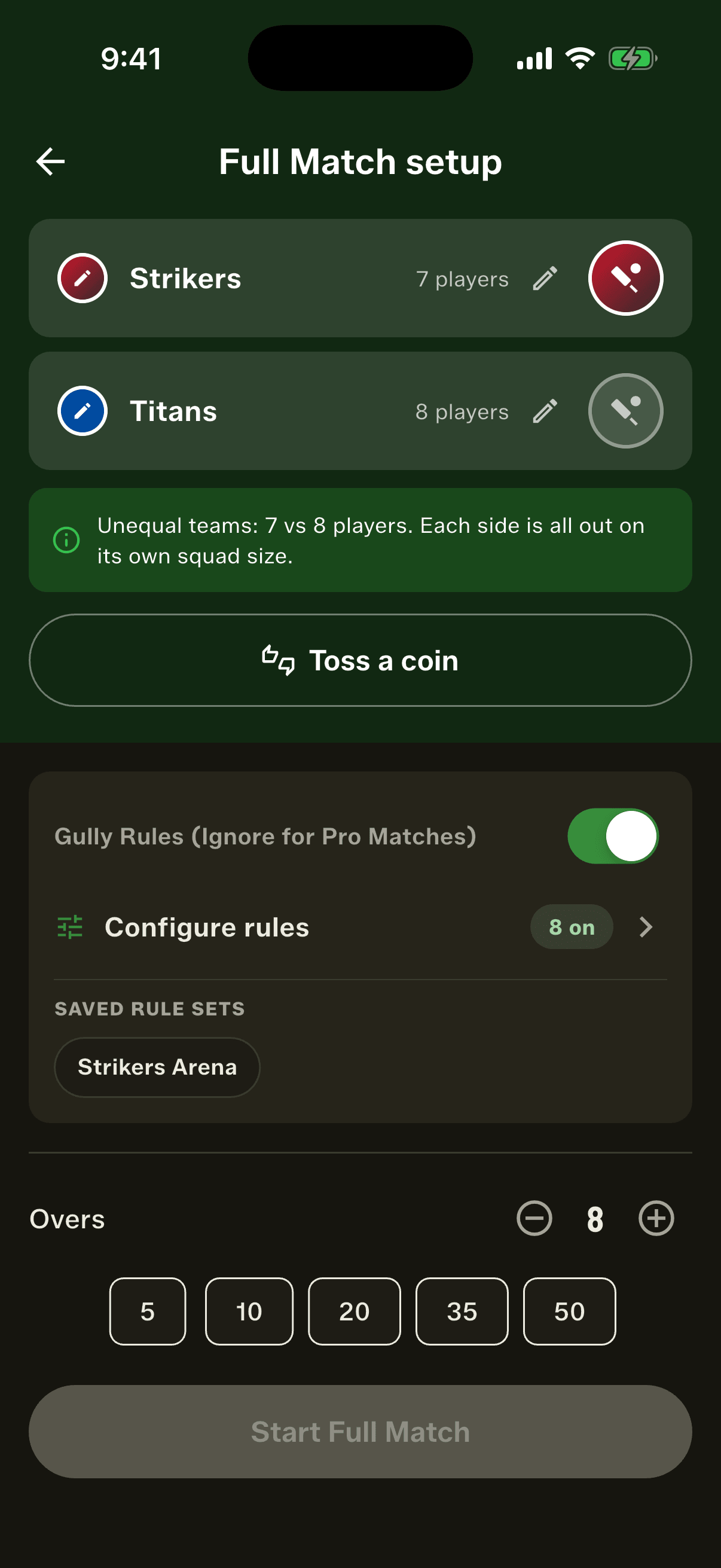
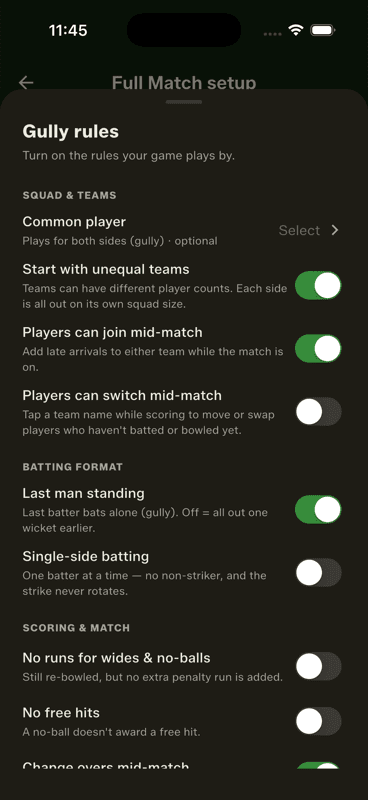
With last man standing on, a seven-player side has seven wickets to lose and an eight-player side has eight. One extra batter sounds like nothing. In a six-over game, where the last pair often decides it, it's a lot.
| Last man standing on | Last man standing off | |
|---|---|---|
| Bigger side all out at | 8 wickets | 7 wickets |
| Smaller side all out at | 7 wickets | 6 wickets |
| Bowlers available | 8 against 7 | 8 against 7 |
How grounds even it up
- A common player. The odd one out plays for both sides. The most common fix by a distance, and it makes the batting level again. See the common player rule.
- First pick to the short side. If captains are picking, whoever ends up a player down gets the first pick.
- A swap after a few overs. If it's obviously lopsided by the third over, move somebody who hasn't batted or bowled yet. That's switching players mid-match.
- Just play it. Plenty of games leave it uneven and let the bigger side enjoy it. Everyone gets a turn next week.
Do it before the toss
The worst time to discuss fairness is after one side has batted. Decide the fix while everyone's still standing around arguing about who brought the stumps, and the rest of the match is only about cricket.