v3.6Now on Android: Single Player mode · team profiles · sort by any statCheck it out
All help guides
Which dismissals count against a batting average?
Full Match
Every dismissal divides into the average except retired hurt, which is treated as not out. Retired out and timed out do count. Not-outs never divide, which is why a 52* can lift an average sharply.
The rule
A batting average is runs ÷ dismissals, not runs ÷ innings. An innings you finish unbeaten adds the runs without adding a divisor.
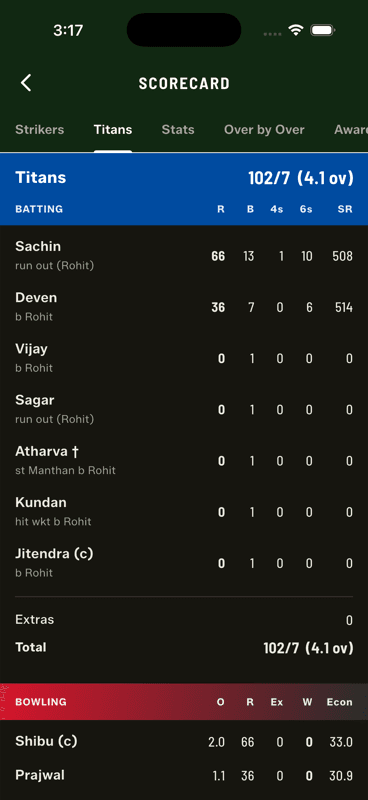
Each of these divides into the average. A retired-hurt line would not.
What counts as a dismissal
Counts — bowled, caught, LBW, run out, stumped, hit wicket, obstructing the field, hit the ball twice, retired out, timed out.
Does not count — retired hurt. It is a pause, not an end, so the innings stays not out.
This is also why a retired-hurt batter can come back and carry on: as far as the scorebook is concerned they were never out.
Bowling averages differ
A bowling average is runs conceded ÷ wickets taken by that bowler. Run-outs and retirements never appear in it, however the batter left.
People also ask
Do not outs count in a batting average?
No, and that is the point. A batting average is runs divided by dismissals, so an unbeaten innings adds runs without adding a divisor — which is why not-outs raise an average.
Does retired hurt count as an out for averages?
No. Retired hurt is treated as not out, so it never divides into the batting average. Retired out and timed out do count.
Do run outs count against the bowler's average?
No. A bowling average uses only wickets the bowler actually took, so run outs and retirements never appear in it.