v3.6Now on Android: Single Player mode · team profiles · sort by any statCheck it out
All help guides
How to retire a batter hurt (and bring them back later)
Full Match
Tap the batter's name on the scoring screen, choose Retire hurt, then pick who comes in. It does not count as a wicket, their runs are kept, and they reappear in the batter list so you can send them back in later.
Step by step
1
Tap the batter's name
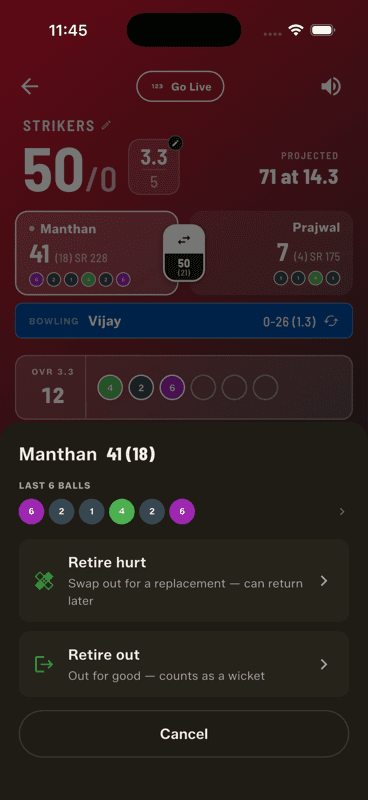
On the scoring screen, tap the card of the batter who is hurt. This opens the batter options — there is no separate menu.
2
Choose Retire hurt
Pick Retire hurt, not Retire out. Retire hurt keeps the batter available; Retire out ends their innings for good and counts as a wicket.
3
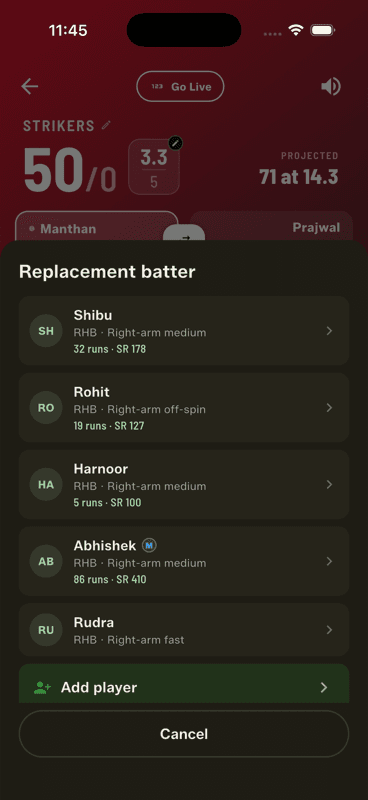
Pick the replacement
Choose who comes to the crease. The list shows every available batter with their career runs and strike rate. Cancel here and nothing changes.
4
Send them back in later
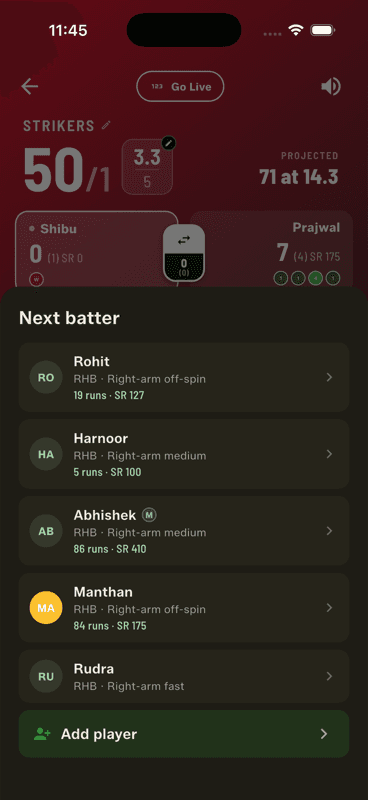
At the next wicket, the retired batter is back in the list — tap them to resume their innings on the same score.
It does not count as a wicket
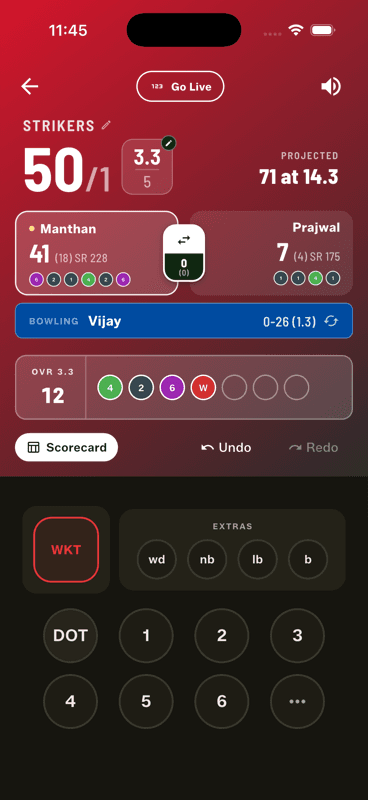
A retired-hurt batter is recorded as a between-balls swap, not a delivery. The team score does not gain a wicket, the bowler is not credited, and no ball is added to the over. In the example above the score stays 50/0 after Manthan retires — only the batter at the crease changes.
It also does not count as a dismissal in the batter's career average. An innings ended by retiring hurt is treated as not out, exactly as it would be in a real scorebook.
Coming back to bat
This is the part most people miss. Because retiring hurt is not a dismissal, the batter is never removed from the available list. The next time a wicket falls or another batter retires, they appear in the Next batter sheet like anyone else.
Manthan resumes on 41 (18) — the runs, balls and recent shots from before the injury are all still there.
They resume on the exact score they left on. Runs, balls faced, boundaries and strike rate all continue from where they stopped, because the app never split their innings in two.
There is no limit on this. A batter can retire hurt, come back, and retire hurt again in the same innings if the injury flares up.
If they cannot come back
If the injury ends their day, you have two options. Leave them retired hurt and simply never send them back in — their innings stays not out, which is the correct scoring treatment. Or, if your group counts it as a wicket, tap their name and choose Retire out instead.
Playing on with an injury
Nothing forces a hurt batter off. If they want to carry on, do nothing at all — keep scoring as normal. Retiring hurt is only for when they need to leave the crease and come back later.
People also ask
How do you do retired hurt in gully cricket?
Agree the batter is leaving injured, mark them retired hurt rather than out, and keep their score. No wicket is added, and they can bat again later in the same innings once they recover. In Gully Crix you tap the batter's name on the scoring screen and choose Retire hurt.
Can a retired hurt batsman come back to bat?
Yes. Retired hurt is not a dismissal, so the batter stays available and can return at the next fall of wicket, resuming on the score they left on.
Is retired hurt out or not out?
Not out. The innings is paused, not ended, so it does not count as a wicket for the team, is not credited to the bowler, and does not divide into the batter's career average.
What is the difference between retired hurt and retired out?
Retired hurt means the batter left injured and can return — no wicket. Retired out means they have finished for good, and it does count as a wicket.