v3.6Now on Android: Single Player mode · team profiles · sort by any statCheck it out
All help guides
Playing with unequal teams (7 vs 8 is fine)
Full Match
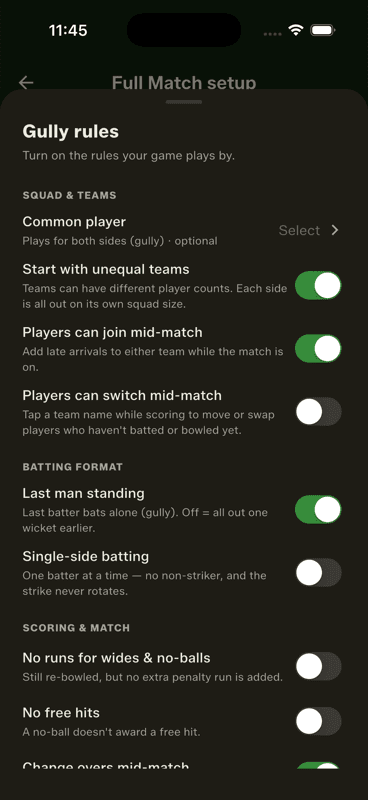
Turn on Start with unequal teams in Gully Rules, and the Full Match setup stops requiring matching player counts. Each side is simply all out on its own squad size.
Eleven-a-side is a luxury the gully rarely has. Fifteen people turn up, so it's 7 v 8 — and the scoring app shouldn't be the one thing on the ground that refuses to play.
Start with unequal teams, under Squad & Teams — each side is all out on its own squad size.
What changes in the maths
Nothing sneaky: each team is all out when its own batters are gone. The 7-player side loses its last wicket one batter sooner than the 8-player side, exactly as it would in the real game. Overs, extras and everything else are unchanged.
Evening it up anyway
Common player — the classic fix: one player turns out for both sides.
Late joiners — if the numbers even up when someone arrives at over 6, add them mid-match.
Mid-match switch — move someone who hasn't batted or bowled yet across to the short side.
People also ask
Can you play cricket with unequal teams?
In gully cricket, routinely. The usual approach is that each side is all out on its own squad size, or that one player fields for both teams. Gully Crix supports both.
How do you handle odd numbers in gully cricket?
Three common fixes: play unequal teams, share a common player who bats and bowls for both sides, or let a latecomer join mid-match to even things up.
What happens if one team has fewer players in cricket?
That team is all out one batter sooner, since it has fewer wickets to lose. Overs and everything else are unchanged.