v3.6Now on Android: Single Player mode · team profiles · sort by any statCheck it out
All help guides
Turning off the extra run for wides and no-balls
Quick MatchFull Match
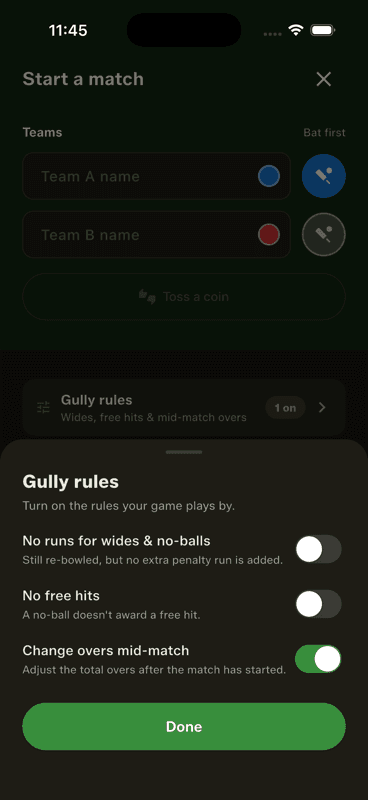
Turn on No runs for wides & no-balls in Gully Rules. The delivery is still re-bowled, but no penalty run is added — the classic tape-ball convention where extras don't cost runs.
What still happens on a wide or no-ball
The ball does not count toward the over — it is re-bowled, exactly as usual.
Runs actually run (or hit, off a no-ball) still count.
A wicket on the delivery still stands by the normal rules.
The only change is the automatic +1: the scoreboard doesn't move just because the bowler missed the strip. Most tape-ball and box games play it this way — the penalty run is a leather-ball tax.
The toggle says it in one line: still re-bowled, but no extra penalty run.
This is one of the three gully rules that also works in Quick Match.
People also ask
Do wides count as runs in gully cricket?
Often not. Many tape-ball and box games re-bowl the delivery without adding a penalty run — the extra run is treated as a leather-ball convention. Gully Crix has a toggle for exactly this.
Is a wide re-bowled in gully cricket?
Yes, almost always. Turning off the penalty run does not change that — the ball still does not count toward the over.
How do you score a wide in cricket?
Normally one penalty run to the batting side plus any runs actually run, and the ball is re-bowled. It never counts as a ball faced by the batter.