How to Organise a Colony Cricket Tournament: A Complete Guide
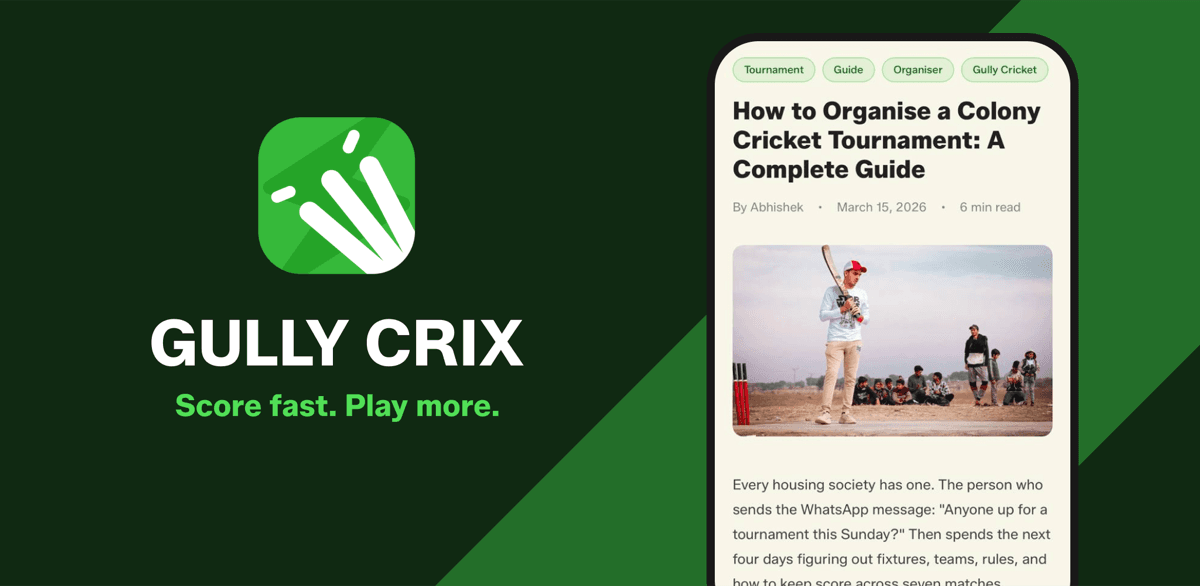
Every housing society has one. The person who sends the WhatsApp message: "Anyone up for a tournament this Sunday?" Then spends the next four days figuring out fixtures, teams, rules, and how to keep score across seven matches.
That person is you. And this guide is for you.
Step 1: Decide the Format First
Before anything else, lock in the format. Everything else follows from this decision.
- •How many teams? (6-8 is the sweet spot for a single-day tournament)
- •How many overs per match? (6 or 8 overs keeps things moving)
- •What format — league (everyone plays everyone) or knockout?
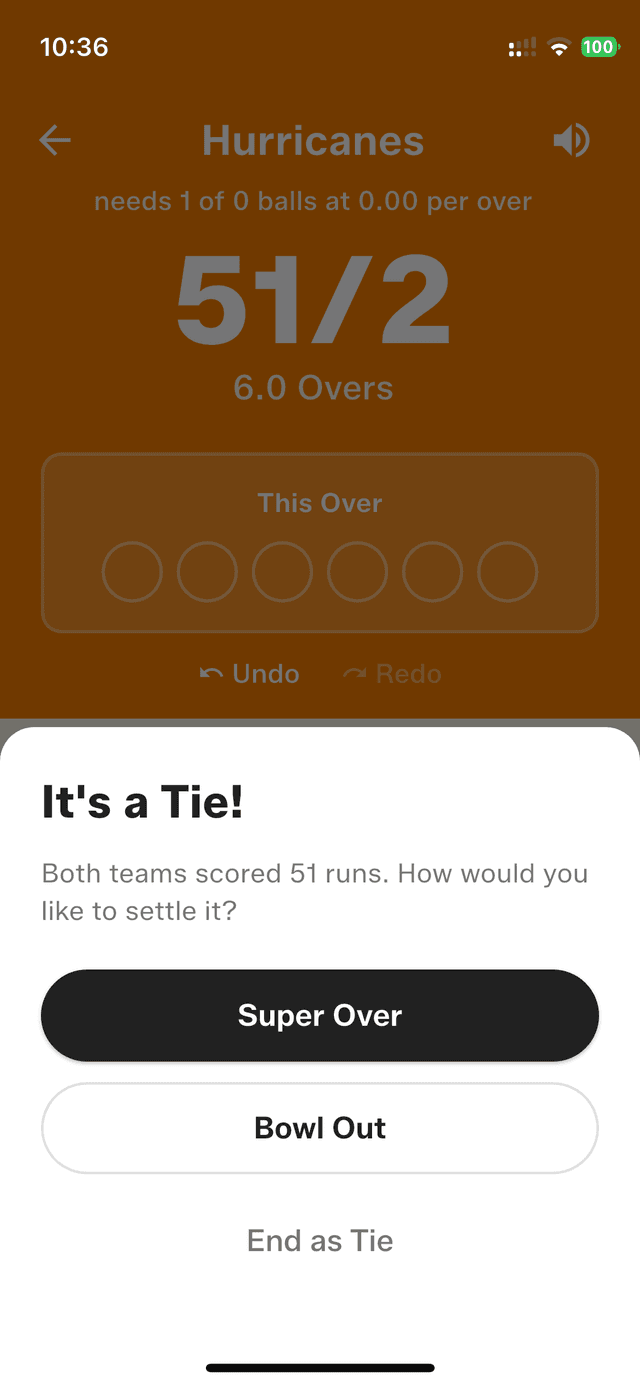
- •What happens in a tie? (Super Over is the most exciting option)
- •What ball? Tennis ball almost always — no bruised fingers, no drama
Step 2: Draw the Fixtures
For a league format with 4 teams in a group, each team plays 3 matches. The classic round-robin draw: 1v2, 3v4, then 1v3, 2v4, then 1v4, 2v3. Simple. No debates.
Share the full schedule on WhatsApp the evening before. Teams that don't show up on time forfeit. Say it upfront — it saves arguments later.
Step 3: Set the Rules (In Writing)
Gully cricket has unwritten rules everyone sort of knows. A tournament needs written ones everyone actually agrees on. Settle these before the first ball:
- •Boundary: where is it? Mark it with cones, bags, or chalk
- •No LBW (almost universal in gully formats)
- •Wide and no-ball rules — does the bowler rebowl?
- •Fielding restrictions — any powerplay overs?
- •Wicket limit — how many wickets ends an innings, or is it overs-only?
- •What counts as a six vs a four when space is tight
Step 4: Keep Score Properly
This is where most colony tournaments fall apart. Paper scoresheets get lost. Someone's uncle insists the score is wrong. Arguments ruin the vibe.
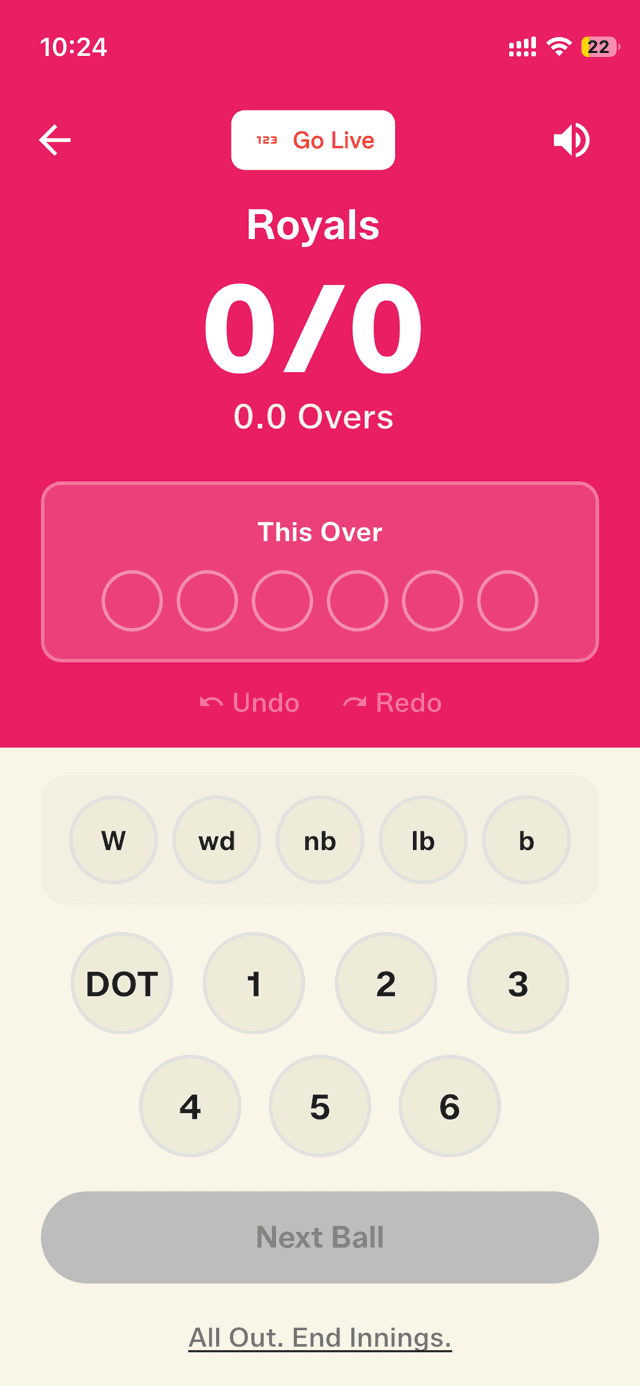
Use a scoring app instead. Gully Crix was built exactly for this — ball by ball scoring, full scorecard, no internet required, no account needed. One person handles the phone. The score is always visible. Disputes drop to zero.
- •Download Gully Crix before the tournament (takes 30 seconds)
- •Assign one scorer per match — ideally a neutral person
- •After each match, screenshot the scorecard and drop it in the group chat
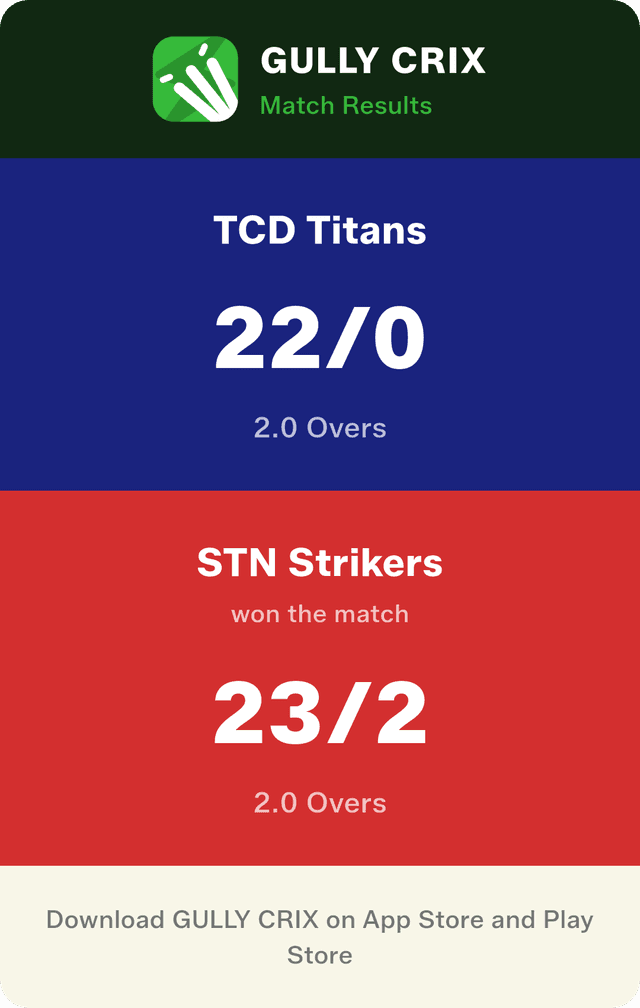
- •Use the match result card to share the winner — looks great in the WhatsApp group
Step 5: Handle the Points Table
Standard cricket points: Win = 2 points, Tie = 1 point each, Loss = 0. If teams finish level on points, use Net Run Rate (NRR) as a tiebreaker.
NRR = (Runs scored ÷ Overs faced) − (Runs conceded ÷ Overs bowled). Update it after every match and post it to the group. It keeps people invested even after a loss.
Step 6: Make It Feel Like an Event
The difference between a forgettable kickabout and a tournament people talk about for months is production value. That sounds expensive. It is not.
- •Print or WhatsApp a fixture card the night before — people love this
- •Name the tournament something local and fun (Society Premier League, Rooftop Cup)
- •Announce the Man of the Match after every game
- •Have a small prize — anything works, even bragging rights
- •Share the final scorecard and winner on the group with a result card from Gully Crix
The One-Page Checklist
- •Format and overs decided ✓
- •Fixture drawn and shared the night before ✓
- •Rules written down and agreed by all captains ✓
- •Scorer assigned with Gully Crix installed ✓
- •Points table template ready ✓
- •Prize confirmed ✓
- •Rain backup plan? (Reduce overs, don't cancel) ✓
Everything else is just cricket. And cricket takes care of itself.
“The best tournaments aren't the most organised ones. They're the ones where everyone wants to play again next weekend.”