Common Player & Last Man Standing: Gully Cricket's Two Most Argued Rules, Explained

Every gully match I've ever played has had two moments of pure diplomacy: deciding what happens when the teams are uneven, and deciding what happens when a team is down to its last batter. Officially, cricket has answers for neither — because official cricket assumes you have twenty-two players and a pavilion. Gully cricket assumes you have nine players, one bat, and a strong difference of opinion. So we invented our own answers: the Common Player and Last Man Standing.
The Common Player Rule
Nine players show up. Four-versus-five is unfair, and nobody wants to sit out. The fix every gully discovered independently: one player plays for both sides. They bat for Team A, then bat for Team B. Usually it's the youngest player, the latest arrival, or — in the most diplomatic gullies — the best batter, so both teams get him.
- •The common player bats for both teams, usually in the same batting position for each.
- •In most gullies they field for whichever side is bowling — which means they never stop playing. Lucky them.
- •Whether they can bowl is a house call. Many gullies say no, to keep things simple.
- •Their runs count separately for each team — 20 for Team A and 15 for Team B are two different innings.
The arguments start when nobody wrote any of this down. Did his runs for Team A carry over? Was he allowed to keep wicket? GullyCrix 3.0 makes the Common Player an actual feature: in Full Match setup, pick anyone from your Squad Book as the common player — even someone who isn't in either team sheet — and they're available to bat on both sides, with their innings scored separately and correctly.

Last Man Standing
In official cricket, when the tenth wicket falls the innings ends — the last batter can't bat alone because there's nobody to run with. Gully cricket looked at that rule and asked: why not? When you only have five players a side, ending the innings with a batter still padded up feels like a waste of a perfectly good batter. So most gullies let the last man bat alone. He has to run both runs himself — twice the running for the same reward, which is why the last man usually swings for the trees.
- •The last batter bats without a partner. Yes, they have to run both ends. Yes, it's exhausting.
- •Some gullies only count even runs (you have to come back to strike); others count everything. House call.
- •It produces the best comebacks in gully cricket — ask anyone who's watched a last man drag his team over the line alone.
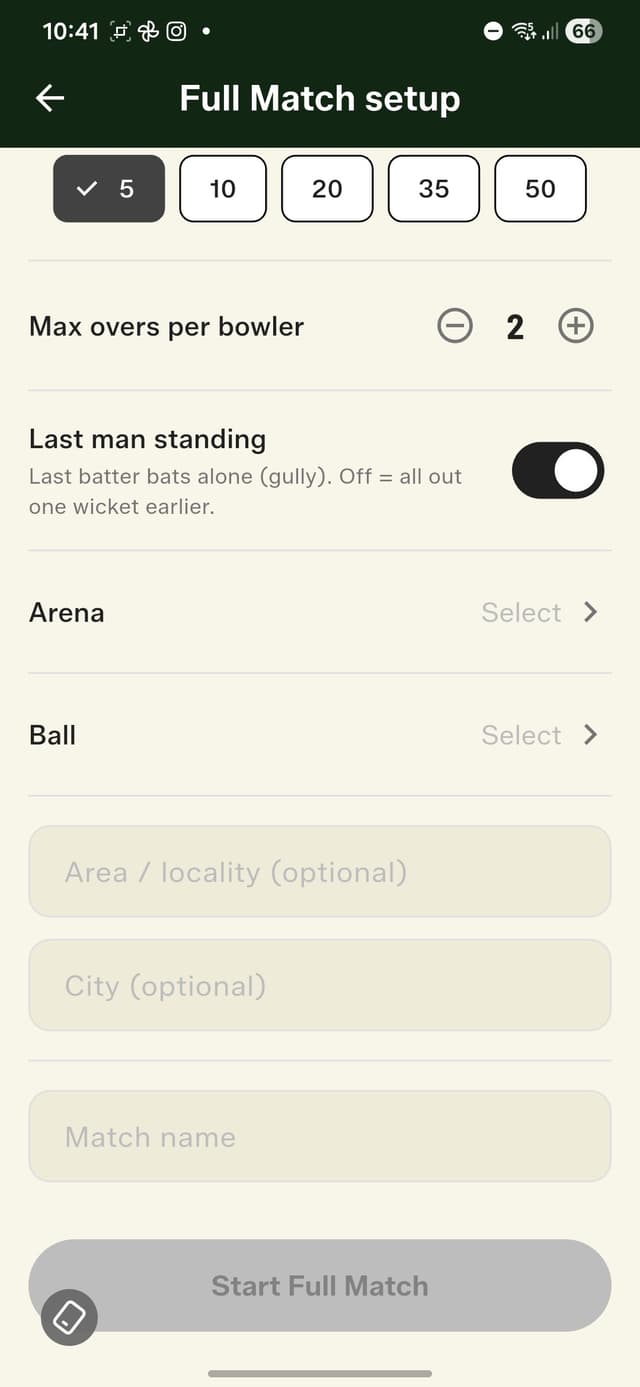
In GullyCrix 3.0, Last Man Standing is a single toggle in Full Match setup. On, and the final batter bats alone when everyone else is out. Off, and the innings ends one wicket earlier, like conventional cricket. Decide it before the toss, and there's nothing left to argue about — the app just enforces it.
Set the Rest of Your House Rules Too
While you're in setup, GullyCrix lets you pin down the other variables that change how a match plays: a maximum-overs-per-bowler cap (no, your fast bowler cannot bowl all five overs), the arena you're playing in — Turf, Ground, Street, Mohalla, or Stadium — and the ball you're playing with, from Tennis and Tape to Leather, Rubber, Plastic, and Wind. Arena and ball aren't just labels: every player's career stats can be filtered by them, so you'll finally have proof that your cousin only scores runs with a tennis ball.
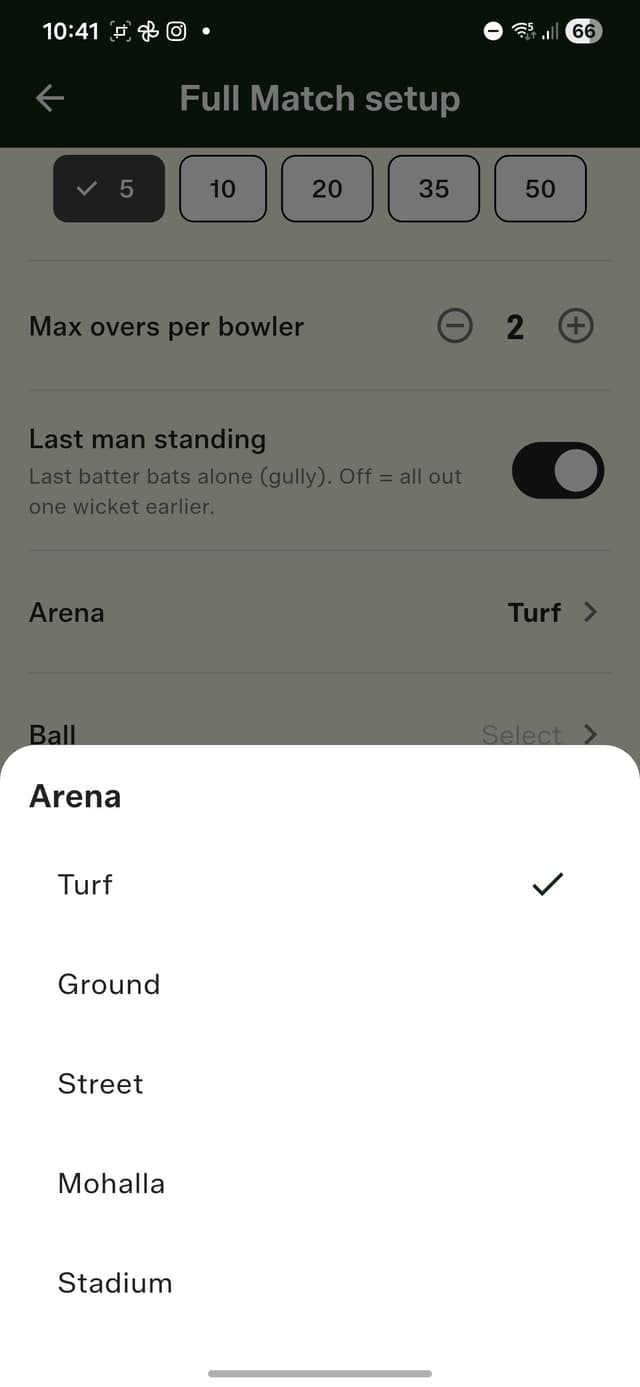
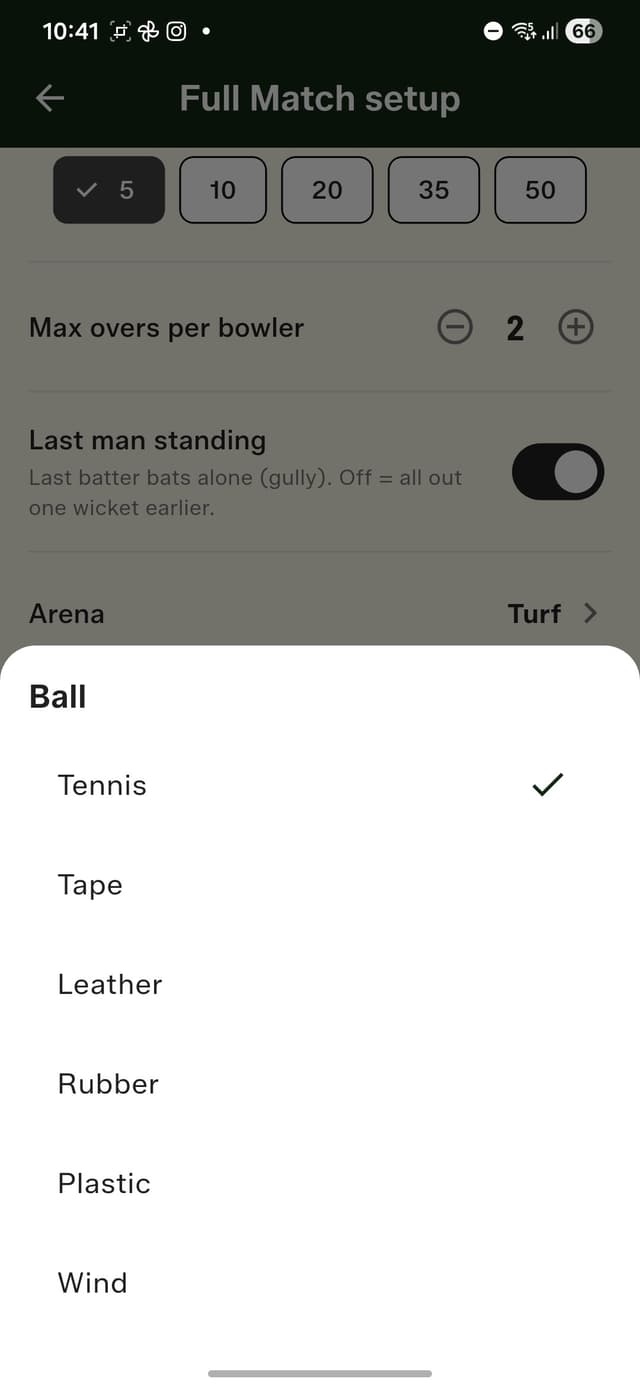
Turf, Ground, Street, Mohalla, Stadium — wherever the match is, it counts.
Both rules ship as part of GullyCrix 3.0's new Full Match mode, alongside named players, full scorecards, and career stats. Read the full 3.0 announcement for everything that's new, or grab the app and settle your gully's arguments the modern way.